

How AI Is Advancing Metal Fabrication Nesting Software
Why Metal Nesting Software Is Becoming More Important
A single sheet of metal can contain dozens of parts, and the way those parts are arranged can influence material costs, cutting time, and the workload waiting at the next production station. For fabrication shops working with tight margins, a small improvement in how cutting jobs are organized can make a meaningful difference across repeated orders.
Nesting software helps manufacturers determine how components should be positioned on sheets, plates, or other stock materials before cutting begins. As automation and artificial intelligence advance, these tools are evolving beyond material utilization to support broader production decisions.
An October 15, 2026, article by Tim Heston in The Fabricator examines this direction for nesting technology. Its central theme is that modern software has an opportunity to coordinate cutting operations, material movement, and decisions across the fabrication workflow rather than focusing exclusively on the layout of parts.
How Nesting Software Works in Metal Fabrication
Nesting is the process of arranging multiple components within available material while respecting their dimensions, geometry, and manufacturing requirements. The objective is to produce the required parts efficiently while limiting unused material and ensuring that the cutting process remains practical.
For example, a shop manufacturing brackets, mounting plates, and equipment enclosures might need to cut several different components from the same steel sheet. Nesting software can calculate a layout that fits the required shapes together while accounting for spacing and other cutting constraints.
The software may need to consider the material’s dimensions, part quantities, cutting clearances, and the capabilities of the selected machine. The best arrangement is not necessarily the one that packs the greatest number of shapes into the smallest area if it creates other production difficulties.
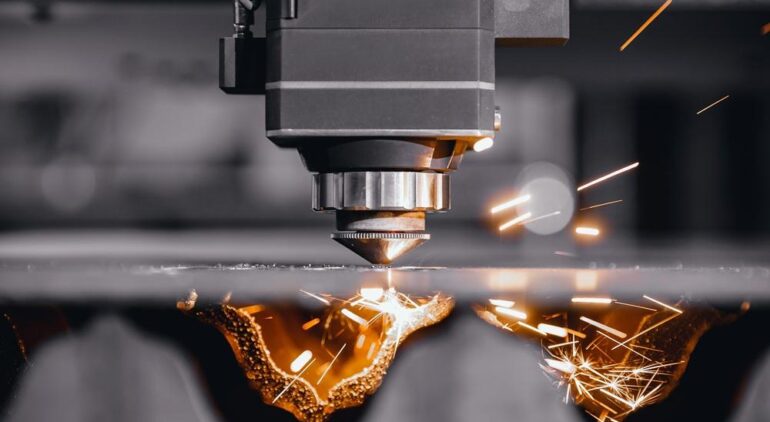
That distinction is important in laser cutting, where the order and arrangement of cuts can influence machine movement and overall processing time. Similar planning principles apply to plasma cutting, waterjet cutting, and CNC punching, although each process has its own operating requirements.
By automating layout calculations, nesting tools can help reduce manual preparation and make material planning more consistent. Their value depends on how well the resulting plans reflect actual shop-floor conditions.
Why Material Savings Alone Are Not Enough
Material utilization is an important performance measure, but it does not tell the entire story of a fabrication operation. A layout that minimizes scrap may still create bottlenecks if the cutting sequence is inefficient or finished components are difficult to identify and move.
Consider a shop producing parts for several customer orders on one sheet. After cutting, the components may need to be separated, labeled, inspected, sorted, and delivered to different workstations for bending or welding.
If these downstream activities are poorly coordinated, an efficient cutting plan may simply move the production bottleneck elsewhere. Parts could wait for identification, operators might spend additional time sorting components, and work could accumulate before the next operation.
This is why the broader evolution of nesting software matters. According to the direction described in The Fabricator, advances in automation and AI could help manufacturers make decisions that account for more than material yield alone.
For fabrication managers, the practical objective is to evaluate how cutting decisions affect the complete order. Material savings should be considered alongside machine utilization, operator workload, production deadlines, and the movement of parts through the shop.
How AI and Automation Could Improve Nesting Decisions
Artificial intelligence and automation could help nesting systems evaluate more production information and identify opportunities that are difficult to manage through isolated manual decisions. The potential benefit is not simply generating a layout faster, but helping manufacturers make better-informed choices throughout the production process.
Depending on the software’s actual capabilities, this direction could involve comparing alternative cutting plans, using production information to support scheduling, or helping coordinate work between machines and downstream operations. These are potential applications, not a guarantee that every nesting package already provides them.
Integration is particularly important. When nesting software exchanges information with CAD/CAM applications, inventory systems, production scheduling tools, and manufacturing execution systems, teams may have a clearer view of what needs to be cut and what happens after cutting is complete.
For instance, accurate information about available sheet sizes and material grades can help prevent a production plan from depending on stock that is not available. Information about order priorities can also help planners evaluate which jobs should be grouped together, provided that doing so is compatible with delivery commitments and machine requirements.
AI can support these decisions, but the quality of its recommendations depends on the quality of the information supplied. Incorrect part dimensions, outdated inventory records, or incomplete machine settings can undermine even sophisticated planning tools.
Manufacturers should therefore treat AI as a potential aid to production planning rather than a substitute for process knowledge, engineering judgment, and verification.
What Fabricators Should Evaluate Before Choosing Software
Buying nesting software is not just a matter of comparing material-yield percentages. A suitable system must support the shop’s machines, materials, part geometries, order volumes, and existing production processes.
Before selecting a solution, fabrication managers should assess several practical considerations.
Machine compatibility: Confirm that the software supports the specific CNC equipment and postprocessors used in the shop. Verify that the generated programs are compatible with the machine controls and established operating procedures.
Material and geometry handling: Check how the system manages sheet dimensions, part spacing, cutting constraints, and material-specific requirements. For laser cutting, confirm that the proposed workflow accommodates the shop’s actual process settings and quality expectations.
Production integration: Determine whether the software can exchange information with existing CAD/CAM, inventory, scheduling, and order-management systems. Clarify whether integration is built in or requires additional configuration.
Downstream workflow: Ask how the software supports part identification, sorting, and communication with subsequent bending, welding, or assembly operations. A system that improves cutting but leaves these tasks disconnected may not address the shop’s biggest operational challenges.
Performance measurement: Test representative jobs using actual production data. Compare material consumption, cutting time, setup requirements, operator involvement, and the time needed to prepare parts for the next process.
A controlled trial can reveal whether a software upgrade delivers measurable improvements under real operating conditions instead of relying solely on demonstrations or advertised capabilities.
Frequently Asked Questions About Nesting Software
Does nesting software work only with laser cutting machines?
No. Nesting is used in several manufacturing processes, including CNC punching, plasma cutting, and waterjet cutting. The appropriate software and configuration depend on the machine, material, geometry, and production requirements.
Can AI eliminate metal scrap?
No software can guarantee zero scrap. Material dimensions, part geometry, cutting clearances, manufacturing constraints, and the need for usable remnants all affect the final result. AI-assisted planning may help identify improvements, but actual performance must be measured.
How can a fabrication shop measure whether nesting software is worthwhile?
Start by recording material utilization, scrap volume, cutting time, programming time, and delays before downstream operations. Compare these measurements with the results from representative jobs after implementation, while accounting for changes in order complexity and production volume.
What Comes Next for Smarter Fabrication Planning?
The next stage of nesting technology is likely to be judged by how well it connects decisions that have traditionally been handled separately. Better coordination between material planning, CNC cutting, scheduling, and downstream processing could help shops identify inefficiencies that a layout-only approach might miss.
For manufacturers considering an upgrade, the sensible next step is to map the current workflow from customer drawing to finished component. Identify whether the biggest losses come from wasted stock, programming delays, machine downtime, sorting, or poor production coordination before deciding which software capabilities matter most.
As AI and automation continue to develop, fabrication shops should prioritize tools that demonstrate practical improvements with their own materials, machines, and orders. The strongest solution will be the one that makes production more predictable and efficient across the entire workflow, not merely the one that creates the most compact nest.