

Ningbo FRIMA CNC Machining Services for Global OEMs
Why Precision CNC Machining Matters in Modern Manufacturing
A component that misses its required dimensions by a fraction of a millimeter can create assembly problems, delay production, or compromise the performance of an entire machine. That is why manufacturers increasingly look for machining partners capable of combining accurate production, documented quality control, and dependable delivery.
Ningbo FRIMA Industry Co., Ltd., a manufacturing company based in Ningbo, Zhejiang, China, is positioning its services around these requirements. In a press release published on October 21, 2026, through openPR, the company outlined its CNC machining capabilities, quality certifications, and experience serving original equipment manufacturers (OEMs) in international markets.
The announcement highlights an integrated manufacturing approach covering machining, engineering support, surface finishing, and assembly. For businesses sourcing custom metal and plastic components, this model offers an example of how a manufacturing supplier can support projects from initial design through production.
Inside Ningbo FRIMA’s Manufacturing Operations
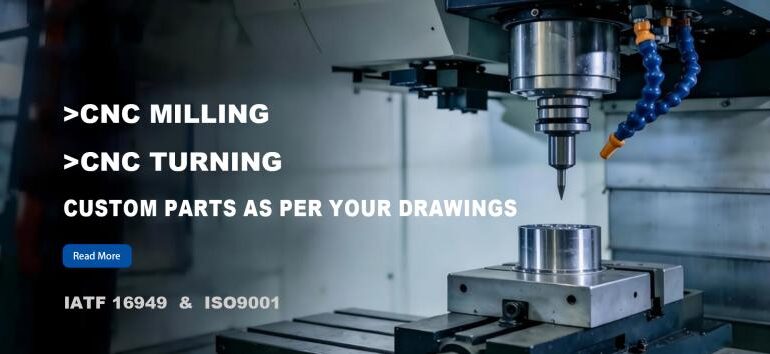
According to the company announcement, FRIMA operates an 8,000-square-foot machine shop in Ningbo. Its production capabilities include milling, turning, drilling, tapping, facing, and cross-drilling, allowing it to manufacture components with different geometries and functional requirements.
CNC, or computer numerical control, machining uses programmed instructions to guide cutting tools and machine movements. Depending on the equipment, material, tooling, and part design, these operations can produce detailed features, accurately positioned holes, machined surfaces, and repeatable dimensions.
Milling is particularly useful for producing flat surfaces, pockets, slots, and complex profiles. Turning is commonly used for cylindrical components such as shafts, pins, and bushings, while drilling and tapping create holes and threaded features needed for fastening and assembly.
FRIMA says its facility handles both metal and plastic workpieces. This flexibility can be valuable to OEMs developing products that combine structural metal components with lightweight polymer parts.
Engineering Support Beyond Cutting Metal
Manufacturing a part successfully often requires more than operating a CNC machine. Engineering teams must also consider drawing interpretation, machining access, workholding, tool selection, dimensional tolerances, and the finishing processes required by the final application.
FRIMA describes its approach as an integrated service that includes design consultation, CNC programming, machining, surface treatment, and final assembly. The company also identifies small-batch prototypes, hole alignment challenges, and difficult anodizing requirements as examples of problems its engineering team works to address.
This support can be especially useful during product development. When a prototype reveals an assembly interference or a feature that cannot be manufactured efficiently, engineering adjustments can help improve the design before production volumes increase.
For purchasing teams, the practical advantage of working with an integrated supplier is simpler coordination. Keeping several manufacturing stages under one organization can reduce handoffs between subcontractors, although buyers should still verify process controls, inspection records, and responsibility for each production stage.
ISO 9001 and IATF 16949 Quality Certifications
Quality management is particularly important when machined parts are used in products where dimensional accuracy, traceability, and consistent production matter. FRIMA states that it holds ISO 9001 and IATF 16949 certifications.
ISO 9001 establishes requirements for a quality management system, including controlled processes and continual improvement. IATF 16949 is an automotive industry quality management standard built around the requirements of ISO 9001 and additional automotive-specific expectations.
For automotive suppliers, IATF 16949 can be relevant when qualifying manufacturing partners for components supplied into demanding production chains. FRIMA also describes support for Production Part Approval Process (PPAP) requirements, which help automotive customers evaluate whether a production process can consistently manufacture parts to specified requirements.
Certification alone, however, does not guarantee that every component will meet its drawing specifications. Buyers should confirm that certificates are current, cover the relevant manufacturing site and scope, and match the requirements of their own supplier approval process.
Surface Finishing and Inspection Under One Roof
A machined component may require additional processing before it is ready for installation. Depending on its application, the part might need burr removal, grinding, heat treatment, electroplating, protective coating, or painting.
FRIMA reports that it provides these finishing services internally. Bringing machining and finishing together can reduce the time parts spend waiting for external processing and make it easier to coordinate corrective action if an inspection identifies a problem.
Surface treatment must still be selected according to the component’s material and operating environment. For example, anodizing is commonly used on aluminum to improve surface characteristics and corrosion resistance, while electroplating may be specified for particular functional or protective requirements. Neither process is suitable for every material or application.
The company also describes using precision inspection equipment to verify component dimensions and complex geometries before shipment. Buyers should request the actual inspection method and measurement records appropriate to their part, particularly when tight tolerances or critical interfaces are involved.
Industries Served by FRIMA’s CNC Machining Services
The company identifies aerospace, medical devices, and automotive manufacturing among its primary application areas. It also lists furniture, power generation, construction, and general OEM projects.
Each industry places different demands on a manufacturing supplier. Aerospace components may require rigorous material traceability and dimensional verification, while automotive production often emphasizes repeatability, process documentation, and formal approval procedures.
Medical device components can have specific requirements for cleanliness, surface finish, material suitability, and regulatory compliance. A supplier’s general machining capability does not automatically establish that it meets every medical manufacturing requirement, so customers should define the applicable standards before placing an order.
FRIMA’s stated product range includes optical components, custom brackets, equipment housings, and assembled parts. The suitability of its services for a particular application depends on the component drawing, material specification, tolerances, expected volume, and any industry-specific qualification requirements.
Production History and Export Logistics
FRIMA’s press release outlines several milestones in its development. The company says its Ningbo manufacturing plant opened in 2009, it received ISO 9000 certification in 2013, and it began exporting to Europe and North America in 2015.
In 2019, the factory achieved TS16949 certification, according to the announcement. The company also reports relocating to a larger facility measuring 5,000 square meters in 2021, with a stated maximum annual production capacity of 2,000 tons.
These figures describe different aspects of the company’s operations: facility size, certification history, export activity, and production capacity. Prospective customers should confirm which capacity figures apply to their specific part family and manufacturing process rather than assuming that total capacity translates directly into available production slots.
The company’s location in Ningbo also supports its export-oriented operations. FRIMA says it works with international shipping providers including UPS, DHL, FedEx, TNT, and EMS, and reports that samples and small-batch orders can reach overseas offices within seven business days. Actual transit times will depend on destination, shipping service, customs clearance, and order readiness.
How to Choose a CNC Machining Supplier
Before selecting a supplier for custom machined components, purchasing teams should evaluate more than the quoted unit price. The following checks can help reduce manufacturing and delivery risks:
- Provide complete technical drawings. Include material grades, dimensions, geometric tolerances, surface finish requirements, and any applicable standards.
- Confirm material traceability. Ask for material certificates and identification procedures when required by the application.
- Review inspection capability. Establish how critical dimensions will be measured and whether inspection reports will accompany the shipment.
- Clarify finishing requirements. Specify coating type, thickness where applicable, appearance, and any post-treatment dimensional limits.
- Request a prototype first. For a new design, evaluate fit, function, and inspection results before approving larger production runs.
- Agree on delivery and quality terms. Confirm lead times, packaging, nonconformance handling, shipping responsibilities, and acceptance criteria in writing.
These steps help establish whether a manufacturer’s capabilities match the actual demands of the project.
Frequently Asked Questions
What information is needed for a CNC machining quotation?
Provide a 2D engineering drawing and, when available, a 3D CAD file. Include the material, quantity, tolerances, surface treatment, inspection requirements, and delivery destination so the supplier can assess the job accurately.
Can CNC machining support both prototypes and mass production?
Yes. CNC machining is commonly used for prototype development and repeat production. The appropriate production plan depends on part complexity, quantity, tooling, inspection requirements, and the supplier’s available capacity.
How can buyers verify a machining supplier’s certifications?
Request current certificates and check the issuing certification body’s validity records where available. Confirm that the listed company name, manufacturing address, certification scope, and expiry date meet your supplier qualification requirements.
What Global OEMs Should Consider Next
Ningbo FRIMA Industry’s October 21, 2026, announcement presents an integrated manufacturing model built around CNC machining, engineering assistance, finishing, inspection, and export logistics. Its stated certifications and production history provide starting points for prospective customers evaluating the company.
Businesses considering FRIMA can learn more through its official website at frimaparts.com and submit a request for quotation with their engineering drawings. Before committing to production, buyers should verify current certifications, confirm material and inspection requirements, obtain a prototype when appropriate, and agree on delivery terms.
As product designs become more demanding, the strongest supplier relationships will depend on matching machining capability with documented quality, clear technical communication, and realistic production planning. A careful review of these factors helps OEMs choose manufacturing partners that fit their requirements rather than relying on price or promotional claims alone.