

Vertical Integration Expands Metal Fabrication Capabilities
Vertical Integration Expands Metal Fabrication Capabilities
A metal fabrication group strengthens production by acquiring scanning and sheet metal services, enabling full in-house capabilities from design through delivery.
Sheet metal fabrication acquisition
When In-House Control Becomes a Competitive Advantage
Metal fabricators often face a familiar challenge: managing multiple vendors across different processes. When a job requires 3D scanning, design work, sheet metal cutting, and assembly, coordinating timelines between external suppliers can slow everything down. Quality consistency suffers. Lead times stretch. Communication breaks down across handoff points. A recent strategic acquisition in the metalworking sector demonstrates how one group is solving this exact problem by bringing critical services directly under one roof.
Understanding Vertical Integration in Fabrication
Vertical integration—the practice of owning multiple stages of production—has long been a strength of larger manufacturers. But it’s not just a scale play. For fabrication shops, controlling the full workflow from initial measurement to final product creates real operational advantages.
When a fabrication group acquires scanning and sheet metal capabilities, they’re essentially removing intermediaries and uncertainty. A job that previously moved between three different facilities now stays within one operation. This matters because every handoff introduces potential delays, miscommunication, and quality drift.
What the Acquisition Brings to the Table
3D scanning technology sits at the critical beginning of many metal fabrication projects. Whether a client needs a replacement part for aging equipment, a custom enclosure, or a precision component, accurate dimensional data is the foundation. Without it, everything downstream gets compromised.
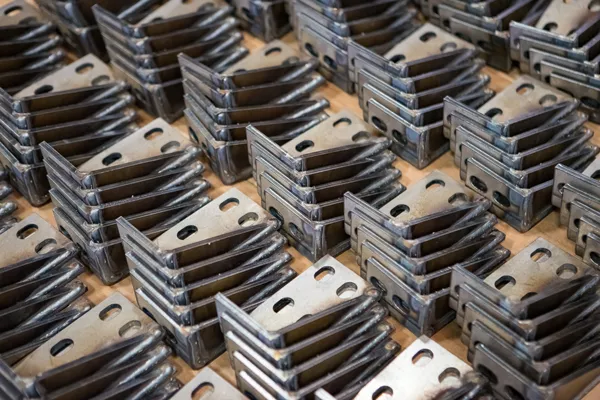
Sheet metal fabrication—cutting, bending, forming, and joining sheet stock—is one of the most versatile metalworking processes. It serves industries from aerospace to medical devices to HVAC systems. By acquiring this capability, a fabrication group can now handle jobs that previously required external subcontracting.
The combination is strategic. A client submits a damaged or legacy component. The in-house scanning team captures its exact geometry in 3D. Design engineers develop production files immediately. Sheet metal technicians fabricate replacement parts without the back-and-forth of sending data to external vendors. Quality control stays internal. Revisions happen in days, not weeks.
How In-House Scanning Improves Quality
3D scanning technology captures physical objects in precise digital form. For fabricators, this eliminates guesswork. Instead of relying on hand measurements, blueprints, or customer descriptions, the scanning process creates a complete, accurate dataset.
When that capability lives inside the fabrication group, the scanning team can collaborate directly with design and production staff. If dimensional data needs clarification, engineers ask questions in real time. If a scanned feature doesn’t match customer intent, the scanner can re-run the measurement or provide alternative angles. This real-time feedback loop prevents costly errors downstream.
Legacy equipment and one-off repairs especially benefit from in-house scanning. Many older industrial parts were never documented in CAD. Reverse engineering them through scanning, then fabricating replacements in-house, keeps a client’s operations running without long production delays.
Sheet Metal Fabrication: Core Strength for Multiple Industries
Sheet metal work covers a broad spectrum of applications. Enclosures for electrical and control systems must meet specific dimensions and material standards. HVAC ductwork requires precise bends and joints to ensure proper airflow. Industrial guards and covers protect machinery while allowing maintenance access. Medical device housings demand tight tolerances and corrosion-resistant materials.
Having this capability in-house means a fabrication group can tackle jobs across sectors without outsourcing. For clients, that translates to faster turnaround and a single point of accountability. For the group, it opens new market opportunities and increases project flexibility.
Material selection matters in sheet metal work. Mild steel, stainless steel, aluminum, and galvanized variants each have specific applications. An in-house team understands these distinctions and can advise clients on the best choice for their environment and performance requirements.
Streamlined Project Workflow from Start to Finish
A typical fabrication project now benefits from simplified logistics. Previously, a complex job might follow this path: client submits part → external scanner captures data → data travels to design firm → design firm creates CAD → CAD travels to sheet metal vendor → vendor produces parts → parts return for final assembly and QC. Each step introduces waiting time and communication risk.
With integrated capabilities, the flow tightens dramatically. Client submits part → in-house scanning team captures data → design engineers work with raw scans to develop production strategy → sheet metal team begins work based on approved designs → final assembly and quality checks complete on-site. Days compress. Quality stays consistent. Accountability is clear.
This efficiency advantage extends beyond just speed. When one organization owns the entire process, decision-making becomes faster. A design team can immediately consult with sheet metal technicians about manufacturability. Material choices can be validated against inventory and capability. Change requests get implemented without vendor delays or miscommunication.
What This Means for Fabrication Clients
Clients benefit in several concrete ways. Lead times shrink because work doesn’t pause between vendors. Communication simplifies—one point of contact instead of juggling multiple suppliers. Quality consistency improves because the same team controls every stage. Cost predictability increases since the group manages all processes internally and can optimize workflows.
For industries that rely on rapid turnaround—aerospace repair shops, equipment maintenance facilities, manufacturing plants with downtime pressure—in-house scanning and fabrication capabilities are genuinely valuable. A broken component that might otherwise require weeks of reverse engineering and vendor coordination can move to production within days.
The Broader Trend: Strategic Consolidation in Metal Fabrication
This acquisition reflects a larger pattern in the metalworking industry. Successful fabrication groups increasingly recognize that owning adjacent capabilities—rather than depending on external partners—creates competitive moats. It improves margins, reduces supply chain risk, and allows faster iteration with clients.
The investment in scanning technology and sheet metal equipment represents significant capital commitment. But the payoff comes from the ability to bid on and deliver more complex projects, serve more industries, and retain customers through superior service.
Common Questions About In-House Fabrication Capabilities
What’s the typical timeline for a custom fabricated part from scan to delivery? With in-house capabilities, simple parts can move from initial scanning through fabrication to completion in one to two weeks. Complex assemblies may take longer depending on design complexity and material lead times, but eliminate the weeks typically lost to vendor coordination.
How accurate is 3D scanning for reverse engineering? Modern 3D scanning technology achieves tolerances within thousandths of an inch, making it suitable for most industrial applications. Precision requirements determine whether scanning alone suffices or if additional hand measurements are necessary for critical dimensions.
Can in-house sheet metal fabrication handle all material types? Most fabrication groups handle steel, stainless steel, and aluminum routinely. Specialized materials or finishes may require external coating or plating, but core fabrication happens on-site, keeping quality and turnaround tightly controlled.
Moving Forward with Integrated Fabrication Services
When evaluating a fabrication partner, consider whether they control the full workflow. Do they scan in-house or outsource? Who handles design? Where does the actual fabrication occur? Shops that own these capabilities end-to-end can deliver faster, with more consistent quality and clearer accountability. For projects where speed, accuracy, and reliability matter, that integration is worth seeking out.