

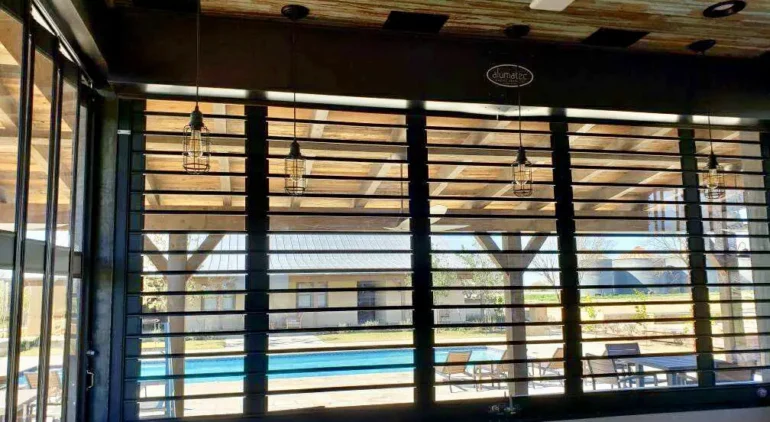
Polycarbonate Roll Up Doors in Valenzuela
Polycarbonate Roll Up Doors in Valenzuela: Why Visibility and Durability No Longer Have to Be a Trade-Off
For decades, the choice for a roll up door was binary: solid steel for security and durability, or a glazed system for light and visibility — but rarely both in a single product. Polycarbonate roll up doors changed that equation. By combining transparent or translucent polycarbonate slats with precision-fabricated steel framing components, these systems deliver natural light transmission and visual openness while retaining the structural integrity and rolling mechanics of a conventional steel shutter.
For business owners, retail operators, and facility managers sourcing polycarbonate roll up doors in Valenzuela and across Metro Manila, understanding how these systems are engineered — and why the supporting steel components matter as much as the polycarbonate itself — is essential to choosing a system that performs well over its full service life. Boswell Limited Co., a steel fabrication company based in Malabon since 2005, applies its CNC-driven metal fabrication expertise to the structural components that make polycarbonate roll up systems function reliably.
What Makes a Polycarbonate Roll Up Door Different
A polycarbonate roll up door is not simply a steel shutter with the slats swapped for plastic. The entire system architecture differs from a conventional solid steel curtain in ways that affect both performance and the fabrication requirements involved.
The Polycarbonate Panels form the visible curtain surface, typically arranged in interlocking horizontal sections similar in concept to steel slats but engineered from impact-resistant polycarbonate sheet. This material transmits natural light into the space while the door is closed — a significant advantage for retail storefronts, showrooms, and commercial spaces where daytime visibility and natural illumination reduce reliance on artificial lighting.
The Steel Framing and Edge Components are where Boswell’s fabrication expertise becomes critical. Each polycarbonate panel section requires precisely formed steel edge channels or end caps that hold the polycarbonate securely, allow adjacent panels to interlock smoothly during rolling, and provide the structural rigidity that polycarbonate alone cannot offer at door-curtain scale.
Guide Rails and Barrel Assembly function similarly to conventional roll up systems, but tolerances matter even more with polycarbonate curtains, since the lighter-weight panels are more sensitive to misalignment than heavier steel slats.
Bottom Bar and Locking Hardware typically remain steel-fabricated components, providing the ground-level structural rigidity and security hardware mounting points that a polycarbonate panel cannot adequately support on its own.
Why the Steel Components Determine the System’s Real-World Performance
It is tempting to think of a polycarbonate roll up door as primarily a plastics product. In practice, the steel framing, edge channels, and structural hardware are what determine whether the system operates smoothly for years or develops problems within months.
Polycarbonate panels expand and contract with temperature changes more than steel does. The edge channels that hold each panel must be fabricated with tolerances that account for this thermal movement — too tight, and the panels bind or crack under thermal stress; too loose, and the panels rattle, leak light at the seams, or allow water infiltration during heavy rain.
This is precision metalwork, not generic bracket fabrication. Getting the channel dimensions correct requires CNC-controlled forming that can hold consistent tolerances across every edge piece in a curtain that may include dozens of panel sections.
CNC Precision: Why It Matters Specifically for Polycarbonate Systems
Boswell’s investment in CNC equipment since 2015 directly addresses the precision requirements that polycarbonate roll up systems demand. Unlike solid steel slat curtains, where slight dimensional variation between slats is largely absorbed by the material’s rigidity, polycarbonate panel systems are less forgiving of inconsistency in their supporting steel components.
Each edge channel, end cap, and interlocking bracket needs to match its neighboring components precisely so the curtain rolls evenly without panels binding, twisting, or pulling unevenly against the guide rails. CNC press brake forming and laser cutting allow Boswell to produce these components with the repeatable accuracy the application requires — every channel identical to the last, regardless of how many sections the final curtain includes.
Manual fabrication of these same components introduces exactly the kind of piece-to-piece variation that causes polycarbonate roll up doors to develop tracking problems, light gaps, and premature panel wear.
Material Selection for the Steel Components
While the visible curtain is polycarbonate, the supporting steel framework still requires the same material decision-making that applies across Boswell’s broader fabrication work.
Galvanized Carbon Steel is the standard choice for guide rails, edge channels, and structural framing in most commercial installations, offering corrosion resistance suited to typical indoor and covered-outdoor applications at a reasonable cost point.
Stainless Steel framing components are specified for installations in coastal areas, food service environments, or anywhere heightened corrosion resistance or hygiene standards apply, ensuring the metal framework does not become the weak point in an otherwise durable system.
Aluminum components are sometimes selected for applications where minimizing overall curtain weight improves operating ease, particularly relevant given that polycarbonate panels are already lighter than steel slats — pairing aluminum framing can further reduce the load on the barrel and operating mechanism.
Applications Where Polycarbonate Roll Up Doors Make Sense
Retail storefronts benefit from the natural light transmission that keeps a space feeling open and visible even when the shutter is closed outside business hours, while still providing a physical security barrier. Showrooms and display spaces use polycarbonate systems to maintain product visibility from outside while controlling access. Warehouse and light industrial facilities sometimes specify polycarbonate sections within larger door systems to bring daylight into interior spaces without skylights or additional electrical lighting infrastructure. Parking structures and covered walkways use polycarbonate roll up systems where weather protection is needed without fully blocking natural light and visibility.
In each of these applications, the appeal of polycarbonate is visibility and light — but the system’s long-term reliability still depends entirely on the quality of the steel framing holding it together.
Customization and the Boswell Consultation Process
Every polycarbonate roll up door installation starts with the same question Boswell asks across all of its fabrication projects: what is this component actually going to do, and in what environment will it operate? Opening dimensions, exposure to weather, expected cycling frequency, and security requirements all influence panel sizing, framing material selection, and guide rail specification.
Because Boswell programs its CNC equipment for each project rather than relying on a single fixed product line, edge channel profiles, bracket dimensions, and framing details can be adjusted to match the specific polycarbonate panel system and opening size required — without the lead times or cost penalties associated with custom tooling.
Finishing Considerations for Steel Framing Components
The steel components in a polycarbonate roll up system still require appropriate surface finishing to match their service environment. Powder coating allows the steel framing to be color-matched to a storefront’s branding or building exterior, ensuring the framework complements rather than detracts from the visual openness the polycarbonate panels are meant to provide. Galvanizing offers straightforward corrosion protection for framing in less visually critical installations such as warehouse or industrial applications.
Boswell Limited Co.: Precision Steel Framing for Polycarbonate Door Systems
Since 2005, Boswell has built its fabrication practice around understanding what a component actually needs to do — not just producing a part to a generic specification. Polycarbonate roll up door systems depend on exactly that kind of attention: steel framing fabricated with the precision and material awareness needed to support a panel material with different mechanical behavior than traditional steel slats.
If your project requires polycarbonate roll up doors in Valenzuela or anywhere across Metro Manila, Boswell Limited Co. brings the CNC fabrication capability and material expertise needed to build a system that performs reliably for years, not just at installation.
Contact Boswell Limited Co. to discuss the steel framing specifications for your next polycarbonate roll up door project.