

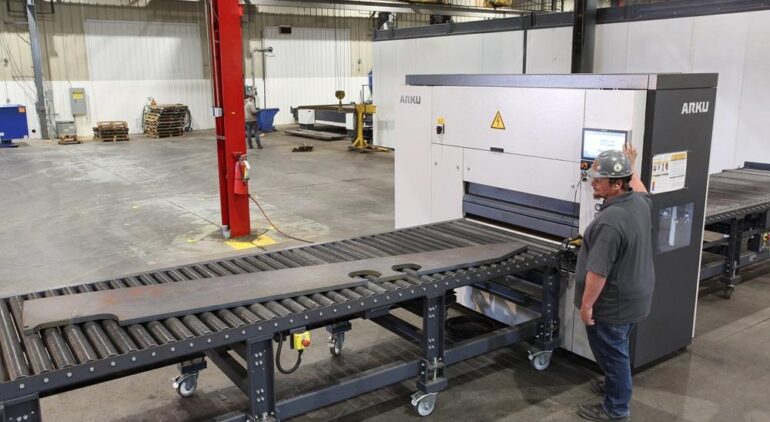
Plasma Cutting Automation Reshapes Metalworking Through 2035
Plasma Cutting Automation Reshapes Metalworking Through 2035
The global CNC plasma tables market is projected to expand at a 4.8% compound annual growth rate through 2035, driven by widespread adoption of automated cutting systems across metal fabrication shops, automotive manufacturers, and shipbuilding operations.
plasma cutting machines
The Shift From Manual to Automated Metal Cutting
A metal fabrication shop owner faces a daily choice: keep running manual plasma cutters that demand constant operator attention, or invest in a CNC plasma table that runs with minimal supervision. For decades, many shops stayed with manual equipment because the capital investment felt too high. That calculation is changing.
The global CNC plasma tables market is entering a sustained growth phase, supported by the ongoing automation of metal fabrication and the replacement of outdated manual and oxy-fuel cutting methods. As industries demand higher precision, faster throughput, and greater material efficiency, CNC plasma systems are becoming standard capital investments across the sector.
Where Plasma Tables Fit in Modern Fabrication
Metal fabrication shops represent the largest segment for CNC plasma tables, accounting for an estimated 30% of demand. These shops serve everything from construction to automotive, and they need equipment that can handle different metal thicknesses and materials with consistent results. Currently, many shops are upgrading from manual plasma cutters to CNC tables to improve accuracy and throughput.
Automotive manufacturing claims roughly 20% of demand, though it operates differently than general fabrication. High-volume production still relies on stamping and laser cutting, but plasma tables excel at prototyping, custom parts, and aftermarket components. The shift toward electric vehicles is creating new demand for custom battery enclosures and structural components—work that plasma tables handle efficiently.
Shipbuilding and offshore engineering require cutting of thick steel plates with high precision, making CNC plasma tables critical infrastructure in those yards. These operations demand large-format gantry systems capable of handling heavy plates and complex geometries. Currently, shipyards are investing in high-definition plasma and hybrid systems to improve cut quality and reduce secondary processing.
Construction equipment manufacturing and structural steel fabrication rely on plasma tables for cutting beams, plates, and custom components. Fabricators are adopting automated plasma systems to increase throughput and reduce waste. The trend toward prefabrication and modular construction will boost demand for precise plasma-cut components.
Artistic metalwork represents a smaller but growing segment. Custom signage, sculptures, and decorative pieces benefit from affordable, versatile plasma cutting. The rise of online custom art marketplaces and maker spaces is expanding this application into a meaningful market niche.
Technology Advances Expanding Cutting Capability
Advances in plasma source technology are expanding what CNC plasma tables can do. High-definition plasma systems now cut through thicker materials and produce finer finishes than earlier generations. Water-cooled systems offer improved precision and longer torch life compared to air-cooled alternatives. These improvements extend the range of metals and thicknesses that plasma cutting handles economically.
Integration with CAD/CAM software and Industry 4.0 frameworks is transforming these machines from standalone tools into data-generating nodes within digital manufacturing chains. A fabricator can now feed design files directly into nesting software, which optimizes material layout automatically, reducing waste and improving cost per cut.
Regional Demand and Market Concentration
Asia-Pacific dominates global demand, accounting for an estimated 40% of the CNC plasma tables market. Rapid industrialization in China, India, and Southeast Asia is driving strong shipbuilding, construction, and automotive sectors. Demand is shifting toward higher-precision and automated systems, with local manufacturers expanding their product offerings.
North America remains a mature market at roughly 25% of global demand. Replacement of aging equipment and automation upgrades fuel steady purchasing. The U.S. and Canada have strong metal fabrication bases, and infrastructure and defense investments support continuous demand. High-definition plasma systems are gaining market share in developed markets.
Europe accounts for approximately 20% of demand. Germany, Italy, and the UK lead in advanced manufacturing. The region emphasizes precision and automation, driving demand for high-end plasma tables. Environmental regulations and energy costs influence investment decisions, but equipment replacement cycles support steady sales.
Latin America and the Middle East & Africa regions are emerging markets. Brazil and Mexico show potential tied to infrastructure projects and manufacturing expansion. The Middle East & Africa region is growing from a small base, driven by construction and oil & gas projects, with demand concentrated in GCC countries and South Africa.
Key Industry Players and Market Structure
Hypertherm leads the global market as a dominant supplier of plasma systems and CNC tables, owning the Torchmate brand. ESAB and Lincoln Electric, both USA-based, offer welding and cutting equipment globally. Komatsu, the Japanese industrial machinery giant, operates through Komatsu Cutting Technologies. Messer Cutting Systems (Germany) and Koike Aronson (Japan/USA) provide high-end industrial solutions.
C&G Systems, Dynatorch, Langmuir Systems, Arclight Dynamics, PlasmaCAM, and Multicam operate in the mid-market, offering CNC cutting solutions at various price points and capability levels. Chinese manufacturers like Shandong Bodor and SteelTailor have expanded globally, particularly in the prosumer and portable segments.
Supply Chain Constraints and Pricing Dynamics
Supply chain constraints, particularly around advanced controllers and plasma power sources, may moderate short-term growth. Manufacturers are expanding production capacity to address bottlenecks. Pricing remains competitive, with downward pressure from technological maturity balanced against upward pressure from automation features, software integration, and hybrid functionality.
The aftermarket for consumables—torch parts, electrodes, nozzles—is growing in importance, providing recurring revenue streams for manufacturers and distributors. This recurring revenue model creates sticky customer relationships and predictable business cycles.
Market Forecast Through 2035
The baseline scenario anticipates steady growth at a 4.8% compound annual growth rate, with the market reaching an index level of 160 by 2035 (using 2025 as a base of 100). This outlook assumes continued industrial modernization, particularly in emerging economies, and a gradual shift from manual cutting to automated CNC systems.
Demand will be strongest for gantry-style and high-definition plasma tables, as end-users prioritize precision and throughput. Replacement of aging equipment in North America and Europe will sustain demand, while new capacity additions in Asia-Pacific, Latin America, and the Middle East & Africa will drive volume growth.
Competitive Pressures and Advantages
Laser cutting systems compete with plasma tables in thin-sheet applications, presenting a genuine market constraint. High initial capital investment and installation costs remain barriers for small shops. Shortage of skilled operators for advanced CNC plasma systems poses a practical challenge for adoption.
However, plasma tables retain fundamental advantages: they handle thicker materials than most laser systems, require less maintenance than waterjet cutters, and cost significantly less than some competing technologies. For the metal fabrication industry, versatility and cost-effectiveness remain compelling reasons to invest.
Product Scope and Technical Standards
The CNC plasma tables market covers gantry-style systems, portable and benchtop machines, industrial heavy-duty and high-definition plasma tables, and hybrid systems combining plasma cutting with router functionality. Machines feature air-cooled and water-cooled plasma sources, standard controllers, software, and safety features. The market includes aftermarket consumables specific to plasma cutting, such as torch parts, electrodes, and nozzles.
The market explicitly excludes standalone plasma power sources, manual hand-held plasma cutters, laser cutting machines, waterjet systems, and thermal cutting machines using only oxy-fuel processes.
Practical Considerations for Shop Owners
What material thickness does your shop typically cut? Plasma tables excel at mild steel, stainless steel, and aluminum up to roughly 1 inch thick, with high-definition systems pushing thicker. If your shop primarily handles thin sheet below 1/8 inch, laser cutting may offer advantages.
How important is edge quality versus throughput? Plasma produces a slightly beveled edge with some dross, requiring secondary cleaning on precision work. Laser cutting eliminates this step. However, plasma’s speed and material versatility often justify the extra prep time in mixed-material shops.
What’s your operator skill level? Modern CNC plasma systems with CAD/CAM integration require less hands-on experience than manual cutters. Nesting software handles material optimization automatically, reducing the need for experienced layout specialists.
What to Consider Before Your Next Equipment Purchase
Evaluate your actual material mix over the past year. Track not just the types of metals you cut, but thickness ranges and batch sizes. Small-batch, high-mix work favors flexible plasma systems. High-volume runs of identical parts might justify laser or dedicated stamping investments instead.
Consider your floor space, electrical infrastructure, and ventilation requirements. CNC plasma tables need proper fume extraction and stable three-phase power. Plan for consumable replacement costs—electrodes and nozzles wear and represent ongoing expenses beyond the initial machine purchase.
The market is poised for resilient expansion through 2035, with cyclical fluctuations tied to construction and manufacturing activity. For metal fabricators evaluating automation, CNC plasma tables remain a versatile, economically defensible choice across a wide range of applications and industries.