

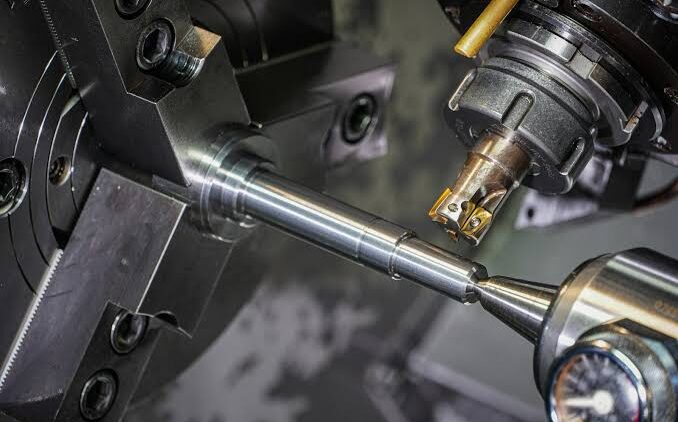
Monel Precision CNC Machining for Marine
Monel Precision CNC Machining for Marine
Monel precision CNC machining services for marine and aerospace applications
Monel CNC machining
Why Monel Matters in High-Performance Manufacturing
When engineers specify materials for subsea equipment or jet engine components, they’re not choosing based on cost alone. Monel alloy—a nickel-copper blend that costs significantly more than stainless steel—gets selected because it survives what ordinary metals cannot. Corrosion resistance in saltwater environments, heat stability above 1,000 degrees Fahrenheit, and mechanical strength that doesn’t degrade under extreme pressure make Monel the go-to material for aerospace and marine applications where failure isn’t an option.
But here’s the catch: Monel is notoriously difficult to machine. Its toughness that makes it valuable in service becomes a liability during fabrication. Work hardening, tool wear, and heat generation during cutting require specialized knowledge and equipment. This is where precision CNC machining expertise becomes critical, and why companies like Yijin Solution—based in Boca Raton, Florida—have built their reputation around mastering this demanding material.
The Unique Challenges of Monel Precision Machining
Monel presents three primary machining obstacles that separate experienced shops from novices. First, the material work-hardens rapidly during cutting, meaning the metal becomes harder as you cut it rather than softer. Second, it generates significant heat in the cutting zone, which can damage tool edges and dimensional accuracy. Third, chip control is unpredictable—Monel produces stringy, tangled chips that can wrap around tools and destroy the part mid-operation.
Each of these problems demands specific solutions. Tool geometry must be optimized with proper rake angles and flute designs. Cutting speeds need careful calculation—too fast and tools break, too slow and work hardening accelerates. Coolant selection and delivery method directly impact surface finish and tool life.
Marine Industry Applications Driving Demand
Subsea equipment operates at crushing pressures where corrosion happens at molecular speed. Monel components in offshore drilling risers, subsea manifolds, and pressure housings need to maintain precise tolerances while resisting saltwater attack for 20+ years. A single corrosion failure at 5,000 feet below the surface doesn’t just cost money—it creates environmental and safety disasters.
Yijin Solution’s marine applications include pump housings, valve bodies, fastener components, and custom connectors that connect drilling systems to the seafloor. These parts often feature intricate internal passages, tight diameter tolerances, and surface finishes that affect sealing performance. CNC precision isn’t luxury here—it’s fundamental to operational safety.
Beyond offshore drilling, marine propulsion systems rely on Monel for seawater-facing components. Impeller designs, bearing races, and shaft sleeves must tolerate corrosion while maintaining the aerodynamic or hydrodynamic precision that drives efficiency. Even millimeter-level dimensional variance can reduce pump performance or increase cavitation noise.
Aerospace Requirements and Specifications
Aircraft engines operate in an environment that combines three hostile forces: extreme heat, vibration, and oxidation. Monel handles this trinity better than most alternatives. In jet engines, Monel appears in combustor liners, turbine casings, and heat exchanger tubes where temperatures climb above 800 degrees Fahrenheit continuously.
Aerospace machining demands repeatability that makes marine tolerances look loose. A turbine component specification might call for ±0.001 inch on critical diameters—achievable only with rigid setups, calibrated tools, and real-time monitoring. Complex geometries like contoured blade attachments or internal cooling channels require multi-axis CNC programming expertise.
Airworthiness documentation requires traceability on every component. This means shops must maintain records of tool offsets, spindle speeds, coolant batches, and inspection data for every single part. It’s not just about making parts—it’s about proving they were made correctly.
CNC Programming and Setup Strategy
Successful Monel machining starts before the spindle turns. CAM programming must account for material behavior at each cutting stage. Roughing passes use aggressive feeds with lower speeds to minimize work hardening. Finishing passes employ higher speeds and lighter feeds to achieve surface quality without tool breakage.
Tool path optimization prevents the worst enemy of Monel work: interrupted cuts. Continuous, smooth tool paths reduce thermal shock on cutting edges. Climb milling versus conventional milling decisions affect tool life dramatically. Many shops optimize for climb milling in finishing operations where spindle runout is tight and surface finish requirements are high.
Fixturing plays an underrated role in Monel precision. Parts must be held with enough force to resist cutting loads, yet flexibility in the fixture itself can destroy tolerance. Custom clamps, sacrificial jaws, and strain-relieving techniques borrowed from aerospace manufacturing ensure the part stays precisely where the program expects it.
Coolant Selection and Thermal Management
The coolant isn’t just a convenience in Monel machining—it’s a process variable as critical as spindle speed. Water-soluble coolants work better than oils for Monel because they dissipate heat more efficiently. However, they also encourage tool edge buildup if concentration isn’t carefully maintained.
High-pressure coolant delivery through the spindle or flood cooling from the side of the tool affects chip evacuation and heat removal. Some shops employ pulsed coolant systems that turn the coolant on and off in timed intervals, reducing thermal shock and extending tool life significantly.
Tool life expectations for Monel are shorter than for aluminum or even stainless steel. A carbide end mill might machine 50+ feet of aluminum but only 8-12 feet of Monel. This math directly impacts cost, so shops that specialize in Monel develop supplier relationships and inventory strategies that minimize downtime from tool changes.
Quality Control and Inspection Protocols
Precision in Monel machining requires verification at multiple stages. Coordinate measuring machines (CMM) are standard for aerospace components, but surface finish checking, hardness testing, and even metallurgical analysis may be required depending on specifications. Some marine applications require ultrasonic testing to verify internal soundness.
First-piece inspection sets the baseline. Once a setup is verified correct, in-process sampling catches drift before parts go out of tolerance. Shops experienced with Monel track tool wear patterns and adjust tool offsets proactively rather than reactively.
Cost Considerations and Lead Time Realities
Monel machining costs more than stainless steel for honest reasons: tool wear, longer cycle times, and lower productivity per spindle hour. A simple part that might machine in 20 minutes from stainless could require 90 minutes from Monel. That’s not inefficiency—that’s material physics.
Lead times reflect this reality. Custom Monel components for aerospace typically run 6-12 weeks, while marine subsea parts might stretch longer if certification testing is included. Planning ahead isn’t optional; it’s essential.
Questions to Ask Your Monel Machining Partner
What’s your experience with aerospace certifications?
If you need AS9100D or equivalent documentation, verify your shop holds active certification and has the quality systems to support it. Certification without real audits and training behind it means nothing.
How do you handle Monel work hardening in your process?
Listen for specific answers: tool geometry specs, cutting speeds for different operations, coolant concentration targets, or chip control methods. Generic answers suggest generic competence.
What’s your typical tool life expectancy for our part geometry?
Shops that quote tool life realistically show they’ve machined similar geometry before. They’ll reference specific tool grades and speeds rather than guessing.
Moving Forward With Your Monel Project
Choosing a Monel machining partner means evaluating more than quote price. Request samples if possible, ask about their most complex Monel project completed recently, and verify they have the equipment, expertise, and certifications your application demands. The difference between a shop that merely “does Monel” and one that specializes in it will show up in quality, lead time, and cost per piece over the project lifecycle.