

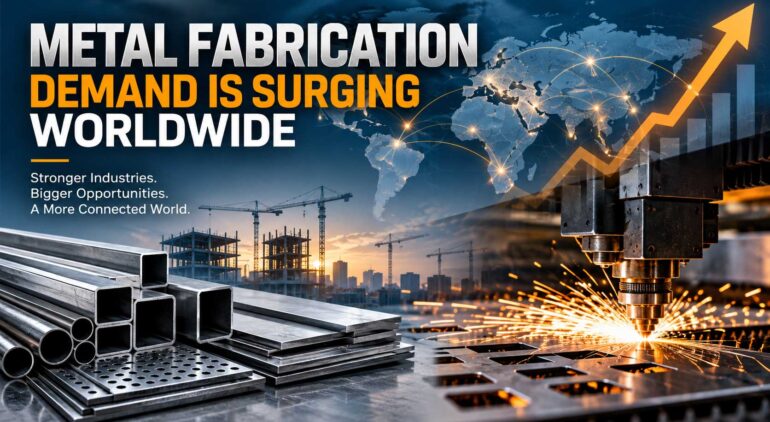
Global Interest in Metal Fabrication Is Surging — Here’s What It Means for Your Project
A Contractor’s Timeline Just Got Tighter
A contractor is three weeks from installing a set of custom steel gates on a residential build. The client changes the design at the last minute, and now every nearby fabrication shop is booked solid.
This kind of scramble is becoming more common. Demand for metal fabrication work, from structural steel to custom sheet metal parts, has been climbing steadily across the industry.
Why Fabrication Shops Are Staying Busy
Search interest in metal fabrication services has grown sharply over the past year, reflecting more contractors, engineers, and property owners actively sourcing custom work. Roll-up doors, decorative grill panels, structural framing, and steel gates are among the most requested jobs.
Part of this growth ties back to construction and renovation activity, but another part comes from people entering the trade itself. Search terms related to welding courses and fabrication training have grown at a faster rate than service-related searches, suggesting more people are learning the skills behind the work, not just hiring for it.
For anyone planning a project, this means lead times matter more than they used to. A shop with a full schedule may not be able to turn around a rush order the way it could a year ago.
What Actually Determines Fabrication Accuracy
Not all fabrication processes produce the same level of precision, and the right process depends on the material and the part.
CNC fiber laser cutting uses a focused laser beam to cut through sheet metal with tight, repeatable tolerances. It works well on mild steel, stainless steel, and aluminum, and it’s often the go-to choice when a design has intricate shapes or small holes.
CNC turret punching uses a rotating tool head to punch holes and shapes into flat sheets. It’s efficient for parts that need repeated identical holes or patterns, though it has different limitations than laser cutting when it comes to complex curves.
CNC plasma cutting and oxy-acetylene cutting are typically used for thicker steel plate where speed matters more than fine detail. They’re common in structural steel work rather than precision sheet metal parts.
Material thickness plays a direct role in which method makes sense. A thin aluminum sheet and a thick mild steel plate don’t behave the same way under a cutting head, and machine setup has to account for that difference.
Bending, Forming, and Tolerances
Hydraulic press brake bending shapes flat sheet metal into angles and forms using a punch and die. The bending allowance, meaning how much extra material is needed to account for the metal stretching around the bend, has to be calculated based on the material type and thickness.
Tooling choice and machine setup both affect how consistent the final bend angle is across multiple parts. Small variations in setup can shift a tolerance from acceptable to out of spec, which is why accurate drawing specifications matter as much as the machine itself.
Hydraulic shearing is often used earlier in the process, cutting large sheets down into workable blanks before laser cutting, punching, or bending begins.
Welding, Marking, and Finishing
Fiber laser welding and traditional welding and assembly methods join metal components together, and the right choice depends on material type, joint design, and how much heat the part can tolerate without warping.
Fiber laser marking is used for adding logos, part numbers, or serial identifiers directly onto metal surfaces without affecting the material’s structural integrity.
Finishing steps, whether that’s a coating, a specific surface texture, or corrosion resistance treatment, should be planned early since they can influence which base material and fabrication method make the most sense.
Material Selection Affects More Than Looks
Mild steel is a common choice for structural and general fabrication work because it’s workable and cost-effective, but it doesn’t have the corrosion resistance of stainless steel.
Stainless steel holds up better in humid or exposed environments, which matters for gates, railings, and outdoor structures. Aluminum offers a lighter-weight option where load-bearing requirements allow for it, while brass and copper are typically reserved for decorative or specialized applications.
Choosing a material isn’t just about upfront cost. It affects long-term durability, maintenance needs, and how the part performs once it’s in use.
When to Consider Professional Metal Fabrication
Some projects are straightforward enough for a general contractor to handle with basic tools. Others, particularly anything involving structural load, precise tolerances, or specialized materials, benefit from a shop with the right cutting and forming equipment.
Professional fabrication is worth considering when a project requires:
- Consistent dimensions across multiple identical parts
- Specific material thicknesses or metal types not easily sourced elsewhere
- Complex cuts, bends, or welded assemblies that need accurate drawing specifications
- A finished product intended for structural or long-term outdoor use
Boswell Limited Co. works with contractors, engineers, and businesses across these kinds of projects, offering cutting, bending, and welding services suited to different material types and design requirements.
Getting a Project Ready to Quote
Before reaching out to a fabrication shop, it helps to have a few basics settled. Confirm the material type and thickness needed for the part, and have drawings or specifications ready, even if they’re rough sketches with dimensions.
Knowing the intended use of the part, whether it’s structural, decorative, or something that will be exposed to weather, also helps a fabricator recommend the right process and finish.
From there, the next step is straightforward: reach out to a qualified metal fabrication company, share the specifications, and confirm timelines before the project schedule gets tighter.