

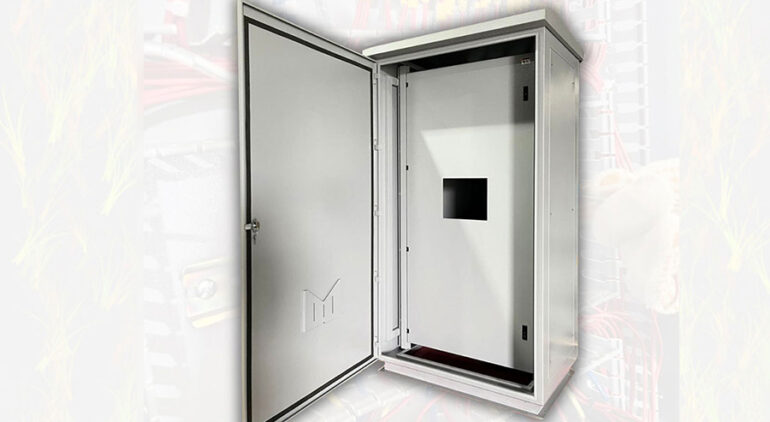
Metal Enclosures in Quezon City
Metal Enclosures in Quezon City: Precision Fabrication for Components That Protect Critical Equipment
Every piece of electrical equipment, electronic system, and industrial control hardware in a commercial or industrial facility sits inside an enclosure. That enclosure is the component that stands between the equipment and every threat in its operating environment — dust, moisture, impact, unauthorized access, and in many industrial settings, chemical exposure or explosive atmosphere conditions that would render unprotected equipment non-functional or unsafe within days of installation.
The enclosure is not a passive container. It is an engineered component with dimensional requirements that determine whether its door closes correctly and its gasket seals effectively, material requirements that determine how long it resists the corrosive forces of its installation environment, and fabrication quality requirements that determine whether the equipment mounted inside it fits as designed, connects to external wiring and conduit as the installation drawings specify, and can be maintained and serviced without the field modifications that a poorly dimensioned enclosure inevitably requires.
For electrical contractors, equipment manufacturers, facility engineers, and panel builders sourcing metal enclosures in Quezon City and across Metro Manila, the fabrication quality of the enclosure they specify is a direct determinant of the installed system’s reliability and service life. Boswell Limited Co., a steel fabrication company based in Malabon since 2005, produces custom metal enclosures across the full material range and application breadth that Quezon City’s diverse industrial and commercial sectors require — applying CNC laser cutting and press brake forming to enclosure components with the dimensional precision that proper enclosure function demands.
What a Metal Enclosure Must Actually Do
The functional requirements of a metal enclosure are more demanding than the product’s apparent simplicity suggests, and each requirement imposes specific fabrication standards that must be met for the enclosure to perform as specified.
Environmental Protection is the primary functional requirement — keeping the internal environment of the enclosure isolated from the external environment at a level defined by the installation’s IP rating or NEMA type classification. An IP65-rated enclosure must prevent dust ingress completely and resist water jets from any direction. An IP54 enclosure must limit dust ingress and resist water splash from any direction. These protection levels are achieved through a combination of enclosure geometry — the overlap between door and body, the depth of the door rebate that compresses the gasket — and the dimensional accuracy that keeps the gasket compression consistent around the full door perimeter.
A door that is not flat, a body that is not square, or a door-to-body interface that varies in gap width around the perimeter produces inconsistent gasket compression — adequate at some points, insufficient at others. The inadequate compression points are where moisture, dust, and contaminants enter, and where the enclosure’s environmental protection rating is not actually achieved in practice despite being specified on paper.
Dimensional Fit for Internal Components is the second functional requirement. Equipment, DIN rails, terminal blocks, circuit breakers, and cable management accessories all have defined dimensions that must fit within the enclosure’s internal volume with the clearances specified in the installation design. An enclosure whose internal dimensions deviate from the drawing — even by a few millimeters — can make it impossible to mount a component at its designed location, fit a cable duct between mounting points, or close the door over the completed internal assembly.
Conduit and Cable Entry Provisions — knockouts, gland plate cutouts, and conduit hubs — must be positioned at the locations specified in the installation drawing, since conduit routing to an enclosure is designed around the entry position. An entry provision that is in the wrong location forces the installer to either modify the enclosure on site or reroute the conduit, both of which add labor cost and, in the case of site modification, may compromise the enclosure’s IP protection at the modified location.
Structural Rigidity of the enclosure body determines whether the enclosure maintains its geometry under the weight of internal components and the mechanical loads of door operation, mounting hardware installation, and cable pulling forces during installation. An enclosure body that lacks adequate rigidity deflects under these loads, distorting the door-to-body interface and compromising the gasket seal that environmental protection depends on.
CNC Fabrication and Why It Determines Enclosure Quality
The functional requirements described above are all dimensional requirements — they depend on the enclosure’s components being fabricated to the specified dimensions with consistency that allows them to fit and function together correctly. CNC laser cutting and press brake forming are the production methods that achieve this consistency at the scale and repeatability that enclosure production requires.
Laser Cutting of Enclosure Panels produces cutout positions — for cable entries, ventilation openings, display windows, and component mounting cutouts — that match the design drawing coordinates with positional accuracy that manual punching or drilling cannot achieve at production rates. A cable entry cutout that is two millimeters off its specified position relative to a DIN rail mounting hole creates a conduit alignment problem that shows up during installation as a conduit that does not run parallel to the adjacent cable duct, or a gland that cannot be torqued to its specified sealing force because the conduit enters at an angle.
CNC Press Brake Forming of Box Profiles produces the enclosure body’s corner geometry — the bends that take a flat laser-cut blank and form it into a three-dimensional box — with consistent bend angles and consistent flange dimensions across every unit in a production run. An enclosure body that is out of square by even a small amount produces the door-sealing problems described above, because the gasket contact surface at the body’s door frame perimeter is not flat — it has a twist that prevents the gasket from compressing uniformly no matter how well the door itself is formed.
Boswell’s CNC equipment addresses both of these requirements within the same integrated production process — the enclosure blank is laser-cut with all openings and mounting holes in their programmed positions, then formed on the CNC press brake with bend angles and sequences that produce a square, flat body whose door frame provides the gasket contact surface that environmental sealing depends on.
Material Selection for Quezon City’s Enclosure Applications
Carbon Steel enclosures, typically powder coated over phosphated substrate, are the standard specification for general-purpose electrical and control enclosures in Quezon City’s commercial and industrial facilities — motor control centers, distribution panels, PLC enclosures, and junction boxes in environments where humidity is managed and the enclosure is not in direct contact with water or chemical agents on a regular basis.
Stainless Steel enclosures are specified for Quezon City’s food processing facilities, pharmaceutical plants, hospitals, and any installation where the enclosure is regularly exposed to cleaning chemicals, water washdown, or the high-humidity conditions that food and healthcare environments maintain. Stainless steel’s corrosion resistance is inherent to the material rather than dependent on a surface coating — meaning the enclosure’s protection does not degrade when the coating is damaged by cleaning equipment or impact, as it inevitably does on carbon steel enclosures in these environments.
Aluminum enclosures serve applications where weight is a practical consideration — portable equipment enclosures, enclosures mounted on structural elements with weight limitations, and outdoor installations where minimizing wind load on the mounting structure is a design consideration. Aluminum enclosures are naturally corrosion-resistant without surface coating in most outdoor environments, and accept anodizing as a hard surface treatment where additional surface durability is required.
Custom Versus Standard Enclosures: When Custom Fabrication Is the Right Choice
Standard catalog enclosures are available from multiple suppliers in Quezon City’s electrical supply market, and for applications where a standard size and configuration meets the installation requirements, a catalog enclosure is often the most cost-effective choice. Custom fabrication becomes the correct choice when the installation requirements deviate from what standard catalog options provide.
Unusual internal dimensions required to house non-standard equipment arrangements, specific cutout positions and sizes not available as standard knockouts, non-standard door configurations including multiple access panels or viewing windows, material specifications not offered in catalog products for a given size range, and very large or very small enclosure sizes outside the range of standard product lines — all of these are conditions where custom fabrication produces an enclosure that fits the installation correctly, while a standard catalog enclosure requires modification that compromises its structural integrity or environmental sealing.
Boswell’s custom enclosure fabrication capability handles the full range of these non-standard requirements, producing enclosures from client-provided drawings or developing production drawings from functional specifications that define the enclosure’s requirements without a complete dimensional drawing.
Boswell Limited Co.: Metal Enclosures Built for Quezon City’s Industrial and Commercial Sectors
Since 2005, Boswell has fabricated metal enclosures as part of its broader custom sheet metal production capability — applying the same CNC precision and material discipline to enclosure panels and formed bodies that it brings to structural components and architectural metalwork. The investment in CNC laser cutting and press brake equipment since 2015 has made the company’s enclosure dimensional accuracy consistent with the environmental sealing and component fit requirements that properly specified enclosures must meet.
If your project in Quezon City requires custom metal enclosures — for electrical distribution, control systems, electronic equipment, or industrial applications across any material specification — Boswell Limited Co. has the fabrication capability and process discipline to deliver enclosures built to fit, seal, and protect the equipment inside them for the full service life of the installation.
Contact Boswell Limited Co. to discuss specifications for your next custom metal enclosure project in Quezon City.