

Flex Machine Tools to Showcase Cutting Solutions
Flex Machine Tools to Showcase Cutting Solutions
Flex Machine Tools will demonstrate advanced fabrication equipment at FABTECH 2026, including waterjet systems, CNC machining centers, and specialized tapping and drilling arms designed to streamline production workflows for modern fabricating shops.
What’s Coming to FABTECH 2026 Booth C960
Fabricators looking to expand their tooling arsenal will want to stop by booth #C960 at FABTECH 2026. Flex Machine Tools is bringing a focused selection of equipment that addresses real pain points in shops—from precision cutting through multiple material types to flexible automation that doesn’t require a massive capital investment or dedicated floor space.
The lineup includes systems built for shops of different sizes and specializations. Whether you’re running a prototype operation or managing a small-parts production line, there’s something worth examining in their demonstration area.
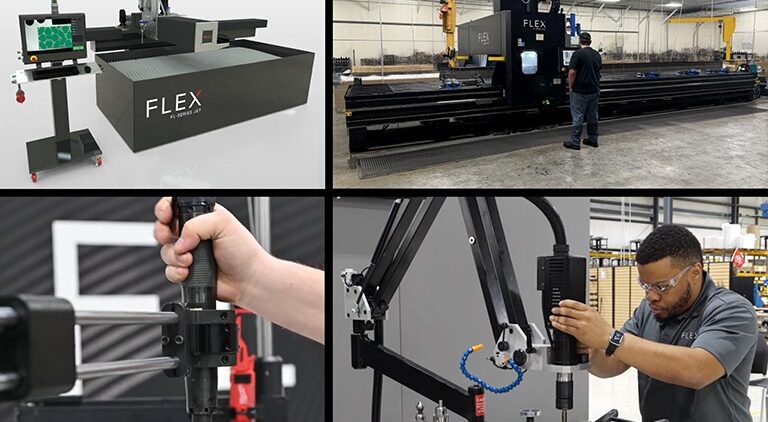
The FL-0404 FlexJet Waterjet System
Waterjet cutting has become a workhorse in modern fabrication because it handles nearly every material without heat distortion, metallurgical changes, or rough edges. The FL-0404 FlexJet is engineered as a compact system, making it suitable for shops that want waterjet capability without commandeering half the facility.
This system excels at cutting a variety of materials—carbon steel, stainless, aluminum, composites, and even stone or tile. The compact footprint makes it practical for fabrication shops, prototype work, and small-part production environments where space and flexibility matter.
One of waterjet’s underrated advantages is its versatility. Unlike laser cutting, which struggles with reflective surfaces and thick materials, or plasma, which leaves heat-affected zones, waterjet delivers consistent results across material families. You’re not limited to one material type or thickness range, which can significantly reduce setup time between jobs.
The G-20-06 G-Series Vertical Machining Center
The G-20-06 is positioned as a general-purpose vertical machining center built for high-performance milling operations. Flex designed it with rigid construction and a large work envelope, two attributes that directly affect both tool life and surface finish in complex components.
A rigid machine structure absorbs vibration during cutting, which translates to better accuracy, fewer tool breakages, and faster cycle times. The work envelope size matters because it determines whether you can machine an entire assembly in one setup or need to reposition and re-fixture multiple times—a hidden cost in smaller facilities.
The G-20-06 targets shops producing complex components across multiple industries. In automotive, it might handle brackets, housings, or transmission components. In aerospace, it could machine turbine components or structural fittings. Food equipment, medical devices, and industrial machinery all rely on the kind of precision this class of machine delivers.
Tapping, Drilling, and Torque Reaction Expertise
Flex is also showcasing a range of specialized arms designed around fastening operations—an area many shops underestimate in terms of efficiency gains. Three systems on display address different scales and operator needs.
The GH-45 Hydraulic Tapping Arm is engineered for large tapping applications. Hydraulic actuation provides consistent force and speed control, which is critical when tapping large holes or working with harder materials. Manual tapping at scale becomes exhausting and inconsistent; a hydraulic arm removes operator fatigue and standardizes the process.
The REM-24D Electric Tapping Arm adds flexibility by allowing operators to switch quickly between vertical and horizontal tapping positions. This matters for shops processing varied part geometries. Rather than repositioning the entire workpiece or fixture, you reorient the arm—a time-saving detail that compounds across high-volume runs.
The MAG-35-H Mag Drill Arm simplifies magnetic drilling operations. Magnetic base drills are fast for sheet and plate work, but handling them manually on large or awkwardly shaped parts introduces inconsistency and safety risk. An arm-mounted system keeps the operator safer while delivering straighter holes and repeatable positioning.
The LR-40 Light-Duty Torque Reaction Arm absorbs the rotational force generated during fastening operations. When a socket or wrench is turning a stubborn bolt, the machine naturally wants to rotate in the opposite direction—that’s torque reaction. A reaction arm captures that force, protecting both the operator and the surrounding tooling.
Why These Demonstrations Matter
Booth demonstrations let you observe these systems under working conditions. You’ll see cut quality on real materials, hear the operating noise level, and ask the manufacturer’s representatives questions you can’t resolve from a spec sheet alone.
For waterjet systems, watching the FL-0404 cut through different thicknesses and materials reveals real-world speed and edge quality. For the machining center, you can assess vibration, coolant management, and operator interface design. For the arm systems, you can feel the balance, check sight lines, and understand how quickly operators could retool between different fastening tasks.
This kind of hands-on evaluation is especially valuable if your shop is considering capital equipment replacement or expansion. Seeing these systems in action helps you assess whether they fit your facility’s layout, workflow, and production mix.
Practical Considerations Before You Visit
If you’re planning to stop by booth #C960, bring photos or drawings of your most challenging parts. Being specific about geometry, material, volume, and current bottlenecks helps Flex representatives provide more targeted guidance on which system or combination makes sense for your operation.
Also consider your facility’s current infrastructure. Do you have adequate compressed air and coolant recirculation for a waterjet? Does your electrical panel have capacity for a 20+ horsepower spindle? Can you dedicate enough floor space? These logistical details often determine whether new equipment actually improves throughput or becomes an underutilized asset.
FAQ: Waterjet and Precision Fabrication Equipment
What materials can a waterjet system cut? The FL-0404 FlexJet can handle carbon steel, stainless steel, aluminum, composites, stone, and tile. It works on materials ranging from thin sheet to thick plate without creating heat-affected zones or changing material properties.
How does a hydraulic tapping arm reduce setup time? Hydraulic arms like the GH-45 provide consistent force and speed, eliminating manual tapping variability. Operators spend less time on each hole, and you avoid broken taps from inconsistent hand pressure or speed. On high-volume runs, this difference compounds significantly.
Is a vertical machining center overkill for small-part production? The G-20-06’s rigid construction actually benefits small-part work because it holds tighter tolerances and faster feeds without chatter. The large work envelope lets you batch smaller parts on a single fixture, reducing setup time and improving throughput.
Next Steps
FABTECH runs October 21–23, 2026, in Las Vegas. If your shop is evaluating new tooling or considering equipment replacement, scheduling a visit to Flex Machine Tools’ booth gives you a concrete picture of what these systems deliver in real conditions. Bring your team members who work with fabrication equipment daily—they’ll spot details that matter most to your operation’s workflow.
Contact Flex Machine Tools directly if you want to schedule dedicated booth time or discuss how these systems might integrate with your current setup.