

Desktop Manufacturing Transforms Entrepreneurial Production
Desktop Manufacturing Transforms Entrepreneurial Production
Compact CNC systems enable small workshops to compete with industrial capacity and speed
Desktop CNC machining
When a Knifemaker Needs Precision Without Losing the Craft
Jesse Jarosz builds knives by hand. His designs are intricate, his reputation built on quality and attention to detail. But as his custom knife business grew, so did a problem: the manual processes that made his work distinctive couldn’t keep pace with demand for more complex geometries and finishes.
He wasn’t alone. Across manufacturing, small business owners face the same friction point. They’ve outgrown basic hand tools but can’t justify $50,000+ investments in industrial CNC systems, dedicated shop space, or full-time machinists.
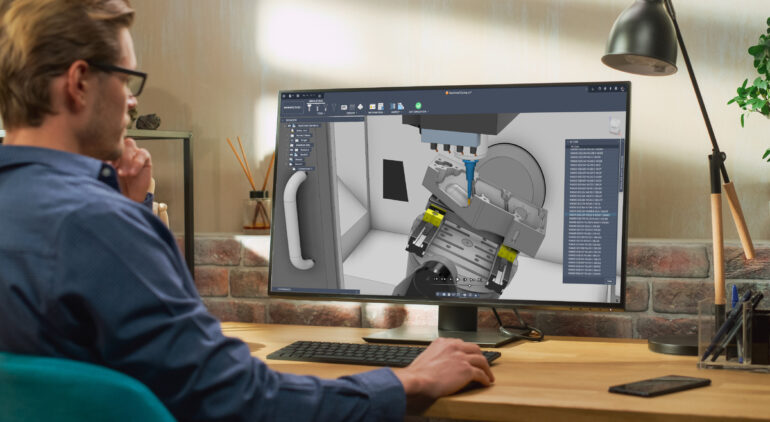
Makera’s Carvera Air addresses exactly this gap—a desktop CNC machine that fits into existing workshop environments and delivers professional-grade cutting accuracy without requiring years of specialized training.
The Real Cost Barrier Shrinks
Industrial CNC machinery traditionally demands more than just capital outlay. You need climate-controlled facility space, electrical infrastructure rated for three-phase power, preventive maintenance budgets, and operators trained to program and troubleshoot. For a one-person operation or five-person shop, these overhead costs often exceed the machine itself.
Desktop CNC changes the equation. By bringing production capabilities into a compact footprint, systems like Carvera Air eliminate the facility burden while preserving the precision that makes commercial work competitive.
Wylder Barrows, an experienced machinist, learned this firsthand. Working independently, he saw an opportunity: produce custom molds and specialty components for small-batch manufacturers who couldn’t access traditional job shops economically. Using Carvera Air, he launched a side business focused on injection mold production. Within approximately six months, revenue from that work covered the machine’s entire cost.
Three Real Workshop Stories
Knifemaking: Blending Craft with Automation
For Jarosz Knives, Carvera Air became a tool for design expansion, not replacement. Jesse integrated the machine into his existing workflow to produce precision components like handle scales, backspacers, and custom inlays. The result: his handcrafted knives maintained their signature quality while enabling faster iteration and more consistent geometry across production runs.
This matters because custom knifemakers compete partly on uniqueness. By automating repetitive geometry work, Jesse freed himself to focus on design innovation and customer-specific customization—the work that justifies a premium price and builds a loyal client base.
Machining as a Revenue Stream
Wylder Barrows brought industrial machining experience to his shop. Rather than licensing production to larger manufacturers or outsourcing components, he used desktop CNC to control his own supply chain and capture margin on specialty work. Injection mold production—particularly for low-volume runs—became viable.
The speed of payback (six months) signals something important: there’s genuine demand in niche markets for on-demand, small-batch precision parts. Barrows’ example suggests that experienced machinists can monetize that demand without industrial overhead.
Niche Markets: Two-Stroke Motorcycle Parts
Rory Turnham operates RS Junkie, serving enthusiasts who maintain and upgrade older two-stroke motorcycles. These machines have dedicated but scattered user bases—enthusiasts in different countries, each needing specialized replacement or performance components.
Traditional mass manufacturing won’t serve niche markets efficiently; minimum order quantities and tooling costs make small runs uneconomical. Carvera Air inverts that equation: low-volume, high-margin specialty parts become feasible to produce locally, on-demand.
What Desktop CNC Actually Handles
Not every manufacturing job suits desktop systems. Carvera Air is designed for precision work in materials like aluminum, brass, plastic, and softer steels—exactly the materials needed for custom handles, injection molds, replacement parts, and prototypes.
The machine delivers the repeatability and tolerance control that separates professional parts from handmade approximations. For knife handles, mold components, and motorcycle parts, those tolerances matter to fit, function, and customer satisfaction.
Heavy ferrous work, thick steel plates, or extremely hard specialty alloys still require industrial equipment. Desktop CNC fills the middle band—work that’s too complex or volume-sensitive for hand finishing, but too small-volume or specialized for commercial job shops to accept economically.
The Barrier Isn’t Just the Machine
Acquiring a CNC system is one hurdle. Learning to operate it, programming tool paths, troubleshooting setup problems—these create a second, sometimes steeper barrier for small shops without in-house expertise.
Software and workflow matter as much as hardware. Accessible, intuitive design software and control interfaces determine whether a small business can absorb the technology or whether it sits idle waiting for a specialist.
Makera’s focus on workflow integration (control software, mobile access, and shared project features) suggests they’re targeting this second adoption barrier—making the machine accessible to entrepreneurs and craftspeople who understand their material and market, not just trained CNC programmers.
Why the Timing Matters Now
Supply chain disruptions have made outsourced manufacturing less reliable for custom work. Lead times stretch, minimum orders stay high, and communication across global job shops adds friction.
Small businesses that bring production in-house gain speed and flexibility. A knifemaker can iterate on a design in days instead of weeks. A machinist can accept custom orders without coordinating with external shops. A motorcycle enthusiast business can respond to customer requests immediately.
This isn’t about competing on price with mass manufacturers. It’s about competing on speed, customization, and direct quality control—advantages that matter most in niche markets and specialty products.
The Broader Shift in Small Manufacturing
Desktop CNC reflects a larger trend: democratization of production technology. What once required industrial scale now works at workshop scale. The machines are smaller, more affordable, and easier to integrate into existing spaces.
This opens entrepreneurial pathways. Someone with machining skills but limited capital can test a business idea without massive upfront investment. Someone with a craft skill—knifemaking, jewelry, specialty components—can accelerate production without losing hands-on quality control.
For industries built on customization and small batches, this is transformative. It redistributes manufacturing capability away from centralized facilities and toward distributed, specialized workshops.
What to Consider Before Investing
Desktop CNC isn’t a universal solution. Before committing, ask:
Does your work involve repetitive geometry? If so, CNC savings multiply fast. If your work is one-off or primarily hand-finished, automation may not improve your workflow.
What materials do you primarily work with? Desktop systems excel with aluminum, brass, softer steels, and plastics. If you’re cutting hard stainless alloys regularly or doing heavy ferrous work, industrial equipment may be necessary.
Is your market ready for faster iterations? If customers value quick prototyping and customization, CNC payoff is faster. If market demand is stable and production volume is truly minimal, overhead may not justify the investment.
FAQ: Common Questions About Desktop CNC
How much space does a desktop CNC machine require? Carvera Air is designed for compact workshop integration, typically occupying footprint similar to a large workbench. Unlike industrial systems, there’s no need for dedicated facility infrastructure, three-phase power, or climate control.
What’s the learning curve for operating desktop CNC? Accessible software and intuitive interfaces significantly reduce training time compared to industrial CNC systems. Someone with existing machining knowledge can be productive quickly. Even those without formal training can learn through guided workflows and project templates, though hands-on mentorship accelerates competence.
Can desktop CNC actually pay for itself? The Barrows example (six months for a mold-focused side business) isn’t universal, but it’s credible for shops targeting niche markets with high-margin specialty work. Payback depends entirely on your market demand and production volume.
Next Steps: Making the Investment Decision
If you’re running a small shop or considering a manufacturing venture, evaluate your actual production bottleneck. Is it speed? Consistency? The ability to take custom orders? Desktop CNC solves speed and consistency problems effectively. If your constraint is different—market access, raw material cost, or labor availability—a machine won’t help.
Talk to shops already using desktop systems in your industry. Ask about real payback timelines, software usability, maintenance, and whether they’d buy again. Those conversations beat any vendor pitch.