

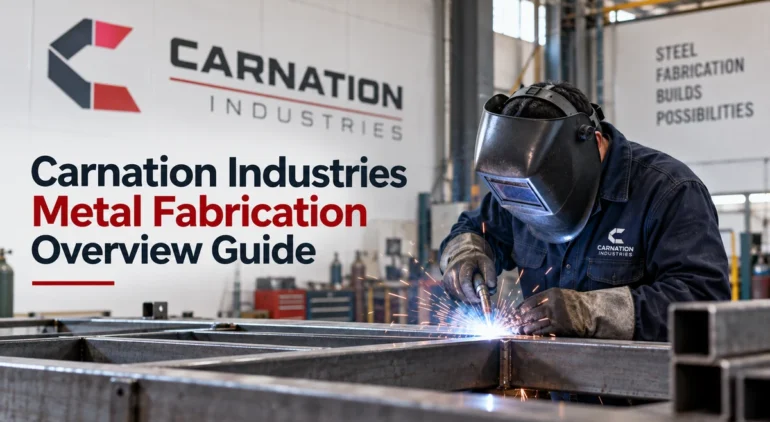
Carnation Industries Metal Fabrication Overview Guide
Carnation Industries Metal Fabrication Overview Guide
Discover Carnation Industries’ metal fabrication expertise, CNC machining capabilities, and business framework for industrial clients seeking quality steel solutions.
metal fabrication business
The Hidden Complexity Behind Every Steel Component You’ve Never Thought About
When you walk past a construction site or drive under a bridge, you’re surrounded by thousands of metal components that required precision engineering to assemble. Most people never consider the fabrication process behind these structures—the cutting, bending, welding, and finishing that transforms raw steel into functional industrial parts. Carnation Industries (BSE: 530609) operates precisely in this space, handling the technical demands that keep infrastructure and industrial operations running smoothly.
Understanding Carnation Industries’ Core Business Model
Carnation Industries has built its reputation as a specialized metal fabrication company serving the industrial sector across India. The company focuses on converting raw materials into precisely engineered components through a combination of traditional metalworking skills and modern manufacturing technology. This dual approach allows them to handle both standardized production runs and custom fabrication projects requiring specific technical specifications.
The company’s business framework centers on understanding client requirements at a granular level. Rather than adopting a one-size-fits-all approach, Carnation Industries evaluates each project for material selection, dimensional accuracy, and surface finishing requirements. This customer-centric methodology has helped them establish long-term relationships with clients across diverse industrial verticals.
Metal Fabrication Processes and Technical Capabilities
Metal fabrication involves several interconnected processes, and Carnation Industries manages the complete workflow from material sourcing through final delivery. The company works with various steel grades, including mild steel, stainless steel, and specialized alloys, depending on the application requirements and environmental conditions the finished component will face.
CNC machining forms a critical component of their technical arsenal. These computer-controlled machines allow the company to achieve tolerances measured in fractions of a millimeter, which proves essential for components that must fit seamlessly within larger assemblies. Unlike traditional manual machining, CNC technology enables consistent reproduction of complex geometries across multiple units, reducing waste and improving production efficiency.
Welding represents another cornerstone of the fabrication process. The company employs various welding techniques—MIG welding for faster production runs, TIG welding for materials requiring superior weld quality, and stick welding for fieldwork or irregular geometries. Each technique suits different applications, and selecting the right method directly impacts the final component’s strength, durability, and appearance.
Material Selection and Its Impact on Component Performance
Steel selection deserves serious consideration before any fabrication project begins. Mild steel offers excellent workability and cost-effectiveness for general structural applications like frameworks and supports. Stainless steel becomes necessary when corrosion resistance matters—think food processing equipment, marine applications, or components exposed to chemical environments.
Carnation Industries guides clients through these material decisions by understanding the operating environment the finished component will encounter. A steel component destined for a coastal installation requires different material choices than one for a climate-controlled factory floor. This expertise prevents costly failures and extends component lifespan significantly.
Surface finishing plays an equally important role in component longevity. Powder coating protects steel from rust while providing aesthetic customization options. Hot-dip galvanizing creates a thicker protective layer ideal for outdoor applications. Clients often overlook finishing until corrosion problems emerge, but Carnation Industries incorporates this consideration from project planning stages onward.
Applications Across Industrial Verticals
The breadth of industries relying on metal fabrication services explains why companies like Carnation Industries remain essential to India’s industrial infrastructure. Heavy equipment manufacturers depend on precisely fabricated structural components that support machinery weighing hundreds of tons. The tolerances and material specifications required here allow zero margin for error.
Power generation facilities require specialized fabricated components that must withstand extreme temperatures and pressures. Chemical processing plants need corrosion-resistant equipment constructed from exotic alloys. Food and beverage manufacturers depend on stainless steel fabrication for sanitary equipment meeting strict regulatory standards. Each vertical demands specialized knowledge that extends beyond basic metalworking.
Infrastructure projects—bridges, transmission towers, and building frameworks—consume enormous quantities of fabricated steel. These projects operate under tight timelines and rigid quality specifications, requiring fabricators capable of managing large-scale production while maintaining consistent quality across thousands of components.
Quality Control and Precision Engineering Standards
Metal fabrication quality directly impacts end-user safety and operational reliability. Carnation Industries implements quality control checkpoints throughout the manufacturing process rather than relying solely on final inspection. This approach catches issues early when corrections prove simpler and less costly.
Dimensional verification occurs at multiple stages using precision measuring instruments. Components undergo visual inspection for surface finish quality, weld integrity, and alignment. Destructive testing—cutting sample welds and testing their strength—validates that fabrication processes meet or exceed specified standards.
Documentation and traceability matter enormously in regulated industries. Clients receive certification confirming that components meet specified material grades, dimensional tolerances, and performance standards. This documentation proves invaluable when components must be replaced or if regulatory audits require proof of compliance.
Equipment and Technology Infrastructure
Modern metal fabrication demands investment in sophisticated equipment. CNC machines, plasma cutting systems, hydraulic presses, and automated welding equipment form the technological backbone of operations. Older equipment might handle simpler projects, but contemporary industrial requirements necessitate machines capable of high-precision work at reasonable production speeds.
The facility layout itself influences production efficiency. Logical workflow organization—receiving and material storage, cutting and machining stations, welding and assembly areas, finishing departments, and quality control zones—minimizes material handling time and reduces component damage risk during internal transport.
Regular equipment maintenance prevents breakdowns that disrupt delivery schedules. Calibration ensures machines continue producing components within specified tolerances. Companies that neglect maintenance often face quality issues and timeline delays that damage client relationships.
Competitive Positioning in the Metal Fabrication Market
India’s metal fabrication sector contains numerous competitors ranging from small workshop operations to large industrial conglomerates. Carnation Industries distinguishes itself through technical expertise, quality consistency, and commitment to customer service. Companies choosing fabrication partners based solely on price often discover that savings evaporate when quality issues require rework or component replacement.
Long-term client relationships indicate competitive strength. Companies continue working with fabricators who deliver quality consistently, meet deadlines, and address problems professionally. This loyalty suggests Carnation Industries has earned trust through performance rather than temporary pricing advantages.
Frequently Asked Questions About Metal Fabrication Services
What factors should I evaluate when selecting a metal fabricator for a critical project?
Start by verifying the fabricator’s experience with your specific application. Request references from similar clients and ask detailed questions about their quality control processes, equipment capabilities, and timeline management. Discuss material sourcing—can they source certified materials meeting your specifications? Visit their facility if possible to assess equipment condition, organization, and safety practices. Finally, confirm they understand your technical requirements thoroughly and can explain how they’ll achieve specified tolerances.
How do lead times affect metal fabrication projects, and what should I expect?
Lead times depend on project complexity, current workload, and material availability. Simple fabrication runs might complete in weeks, while custom projects requiring specialized equipment setup or hard-to-source materials can require months. Provide fabricators with realistic project timelines early in discussions. Building buffer time into your project schedule prevents stress when unforeseen complications arise.
What’s the difference between welded and bolted connections in fabricated structures?
Welded connections create permanent, rigid joints through fusion of base materials, offering superior strength for stressed applications. However, welding requires skilled technicians and inspection to ensure quality. Bolted connections prove faster to assemble and easier to disassemble if component replacement becomes necessary. The right choice depends on your specific application’s structural demands, assembly timeline, and long-term maintenance requirements.
Moving Forward With Your Metal Fabrication Needs
As you consider metal fabrication projects, remember that the lowest bid rarely delivers the best total value. Evaluating fabricators based on technical capability, quality systems, and client relationships produces better outcomes than price-focused decisions. Before initiating any significant fabrication project, invest time understanding material requirements, production timelines, and quality standards your application demands. Request detailed proposals that address these specifics rather than generic quotes. Companies that ask clarifying questions and demonstrate technical understanding prove more valuable partners than those offering immediate answers without seeking full project details.