

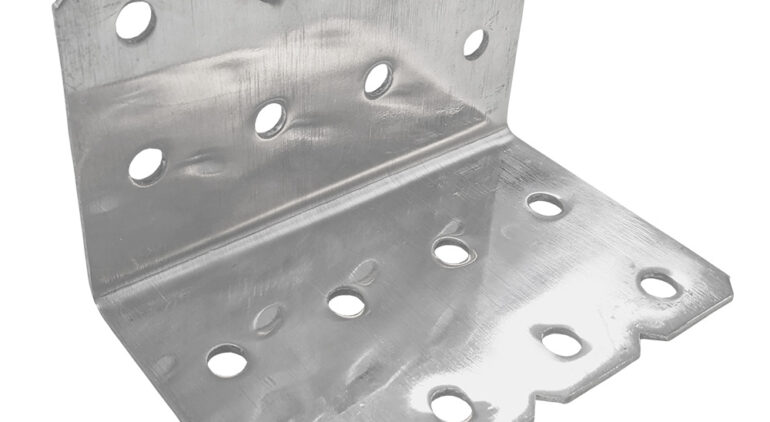
Brackets in Quezon City
Brackets in Quezon City: Why the Smallest Structural Component Demands the Same Precision as the Largest
A bracket is easy to underestimate. It is often the smallest fabricated steel component on a project — a flat plate bent into an angle, a gusset welded to a flange, a clevis mount laser-cut from sheet stock. Its function appears simple: hold something in position, transfer a load from one structural element to another, provide a connection point where two components need to meet. But the structural role a bracket plays is disproportionate to its size, and the consequences of a bracket that is incorrectly dimensioned, made from the wrong material, or fabricated without adequate process control play out in ways that range from annoying to genuinely dangerous depending on the load it carries and the application it serves.
For construction contractors, equipment manufacturers, facility operators, and product designers sourcing brackets in Quezon City and across Metro Manila, understanding what separates a properly fabricated bracket from a generic one is the foundation of making procurement decisions that hold up in the field. Boswell Limited Co., a steel fabrication company based in Malabon since 2005, produces custom metal brackets across the full range of structural, industrial, and commercial applications that Quezon City’s diverse economy generates — applying the same CNC-driven precision to a small sheet metal bracket that it brings to a structural base plate.
What Makes a Bracket a Structural Component, Not Just a Hardware Item
The word “bracket” covers an enormous range of fabricated forms and functional roles, but every bracket in a load-carrying application shares one defining characteristic: it is the component through which force is transferred between two structural or mechanical elements. That force transfer happens through the bracket’s material, through its weld joints to adjacent components, and through the fasteners or welds connecting it to the elements it serves.
In a construction context, a structural connection bracket transfers beam end reactions into a column flange. In a mechanical context, a mounting bracket transfers equipment weight and vibration loads into the structure supporting the equipment. In an industrial context, a pipe support bracket transfers pipe weight and thermal expansion forces into the building structure. In a product context, a component bracket maintains the positional relationship between two parts of an assembly through the full range of loads and vibration the product experiences in service.
In every one of these contexts, the bracket’s geometry — its hole positions, its bend angles, its section dimensions, and its weld preparation — must match the engineering requirement for the connection it is making. A bracket that is out of specification in any of these parameters either fails to connect correctly, introduces misalignment into the assembly, or carries less load than the design assumed.
The Fabrication Variables That Determine Bracket Quality
Hole Position Accuracy is the most commonly specified bracket tolerance and the one most directly affected by the difference between CNC and manual fabrication methods. Brackets with connection holes that are positioned incorrectly relative to the bracket’s edges or each other create misalignment at the connection point — forcing the installer to either use oversized holes that reduce the connection’s structural effectiveness, or to modify the bracket on site in ways that compromise both the geometry and the material integrity at the modified location.
CNC laser cutting and drilling produce hole positions accurate to the fractions of a millimeter that structural connection design requires, derived directly from the engineering drawing coordinates rather than from manual layout measurements that introduce interpretation error at every step.
Bend Angle Accuracy determines whether a bent bracket — an angle bracket, a Z-bracket, a channel section — produces the correct geometry at the connection interface. A bend that is even one or two degrees off its specified angle changes the effective length of the bracket’s legs, alters the load path through the connection, and in multi-bracket assemblies, creates cumulative misalignment that compounds across the number of brackets in the run.
CNC press brake forming programs the bend angle directly, and the machine executes it consistently across every bracket in the production run. The first bracket and the hundredth share the same bend angle, the same bend position, and the same leg dimensions — which means every bracket installs identically and produces the same connection geometry.
Material Thickness Consistency affects the bracket’s section strength and the weld preparation at its edges. Brackets cut from certified plate or sheet stock of the specified thickness start the production process with a known material cross-section that the structural design assumed. Brackets cut from off-specification or uncertified material introduce uncertainty about the actual section strength that only becomes apparent when the connection is stressed.
Edge Quality at Laser Cut Surfaces affects both the visual quality of the finished bracket and its functional performance at welded joints. Laser-cut edges that are clean, square, and free of dross and oxide contamination are the correct starting condition for weld joint preparation — the weld fuses to clean base metal rather than to a contaminated surface that introduces porosity and incomplete fusion into the joint.
The Range of Brackets Boswell Fabricates for Quezon City Applications
Quezon City’s construction, manufacturing, and commercial sectors generate bracket fabrication requirements that span a wide range of forms, sizes, and structural demands.
Structural Connection Brackets for building construction include beam seat brackets, shear tab connectors, and moment connection plates that transfer gravity and lateral loads between structural steel members in commercial and institutional buildings across Quezon City’s active construction pipeline. These brackets are fabricated to engineering drawings from certified structural steel grades, with hole positions CNC-drilled to the positional accuracy that bolted connection design requires.
Equipment Mounting Brackets support mechanical, electrical, and process equipment installed in commercial and industrial facilities across Quezon City — HVAC units, electrical panels, generators, pumps, and production machinery all require fabricated steel mounting structures that are designed around the equipment’s anchor bolt layout and load distribution characteristics. Equipment mounting brackets must be dimensioned to match the equipment supplier’s mounting specifications exactly, since any dimensional mismatch creates alignment problems that affect both the equipment’s operational performance and the integrity of its connection to the supporting structure.
Pipe and Conduit Support Brackets carry the weight of piping, conduit, and cable management systems in commercial and industrial buildings, distributing load into the building structure at regular intervals along the run. Support bracket geometry must accommodate the pipe or conduit diameter, maintain the specified clearance between the supported element and the structure, and provide the attachment method — U-bolt, clamp, or welded saddle — required for the specific piping system.
Shelf and Storage System Brackets support shelving, storage racks, and material handling systems in Quezon City’s warehouse and light industrial facilities, where load capacity, geometric consistency, and material durability all affect the safety and functionality of the storage system over its service life.
Architectural and Facade Brackets support cladding panels, signage, canopies, and architectural metalwork on commercial and institutional buildings in Quezon City, requiring fabrication accuracy that positions the supported elements correctly relative to the building structure while meeting the structural requirements of the connection under wind and gravity loads.
Custom Product Assembly Brackets are fabricated for manufacturers and product developers in Quezon City’s commercial and industrial sectors who need precision metal components that maintain positional relationships between assembly elements through the full range of loads and environmental conditions the product experiences in service.
Material Selection Across Quezon City’s Bracket Applications
The material appropriate for a specific bracket application depends on the structural load magnitude, the environmental exposure, and any weight or appearance constraints the application imposes.
Carbon Steel is the default structural material for the majority of bracket applications in Quezon City’s construction and industrial sectors. Its combination of yield strength, weldability, and consistent mechanical properties across the available thickness range makes it the most versatile and cost-effective choice for load-carrying brackets in applications where corrosion protection is managed through surface finishing rather than inherent material resistance.
Stainless Steel brackets are specified for applications in Quezon City’s healthcare facilities, food processing operations, and coastal or high-humidity environments where the bracket’s corrosion resistance must be maintained without ongoing surface coating maintenance — applications where a painted carbon steel bracket would require periodic recoating to maintain its corrosion resistance and where access for recoating maintenance is limited or impractical.
Aluminum brackets serve applications where weight reduction is a functional requirement — large-format facade support systems where minimizing dead load on the cladding attachment, equipment mounting in structures with limited floor load capacity, and product assembly applications where component mass affects portability or operational requirements.
Brass and Copper brackets appear in precision electrical and electronic assembly applications, decorative hardware mounting, and specialized industrial equipment where the material’s conductivity or corrosion resistance characteristics are required at the connection point itself rather than just the primary structure.
Boswell Limited Co.: Precision Brackets Built for Quezon City’s Full Structural and Commercial Range
Since 2005, Boswell has fabricated brackets alongside the full range of structural and industrial components its clients require — base plates, enclosures, door systems, and architectural metalwork — applying the same CNC precision and material discipline to the smallest connection bracket that it brings to the largest structural component. The investment in CNC cutting and bending equipment since 2015 has made the company’s bracket fabrication consistently accurate across production quantities that range from single custom pieces to high-volume batches of identical components.
If your project in Quezon City requires precision-fabricated brackets — structural, industrial, architectural, or product assembly — Boswell Limited Co. has the equipment capability and engineering process to deliver components that meet their dimensional specification and perform reliably under the loads they carry.
Contact Boswell Limited Co. to discuss bracket specifications for your next project in Quezon City.