

Arizona steel fabrication company expands capacity with $20M investment
Arizona steel fabrication company expands capacity with $20M investment
AF Steel Fabricators opens second facility to meet surging demand from major projects including TSMC, data centers, and high-rise construction across Phoenix metro.
steel fabrication expansion
From 60 Tons a Day to 240: How One Arizona Fabricator Is Scaling Fast
When a steel fabrication shop outgrows its facility in just five years, something is working exceptionally well. AF Steel Fabricators LLC built a 65,000-square-foot facility in 2021 expecting it to handle the company’s workload for the next two decades. Instead, demand has accelerated so dramatically that the operation needed to expand before the first facility even hit its tenth anniversary.
The company is opening a second 55,000-square-foot processing facility called Fab 2 at the beginning of October, backed by a $20 million investment. The expansion reflects what’s happening across Arizona’s construction and industrial sectors right now—projects are moving faster, clients are more ambitious, and the skilled trades can’t keep up.
What’s Driving the Demand
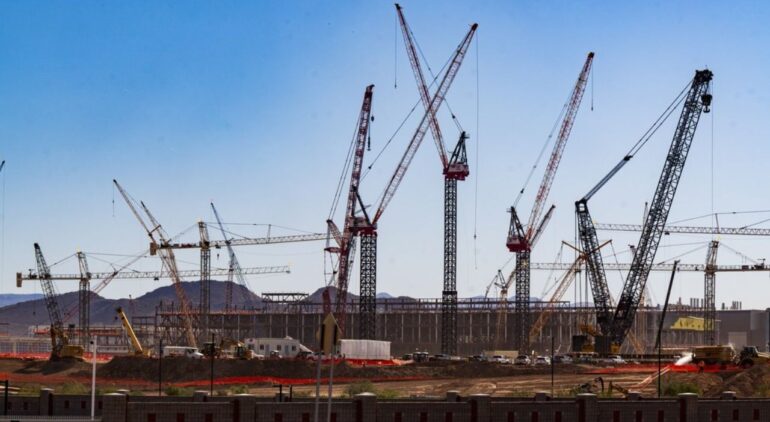
Phoenix metro has become a magnet for major industrial and commercial construction. AF Steel Fabricators is handling structural steel work on projects that include TSMC’s north Phoenix campus, multiple data center builds, high-rise office and residential buildings, and fabrication contracts for southwest border wall infrastructure.
Each of these project types brings different demands. TSMC’s semiconductor manufacturing facility required precision and scale. Data centers demand fast turnaround and consistent quality across repetitive frames and supports. High-rise buildings need complex connections and tight tolerances. Border wall contracts require speed and volume. No single facility running at capacity could handle this portfolio.
Growth this steep forces a choice: turn work away, stretch existing capacity to breaking point, or invest in expansion. AF Steel chose to expand, which signals confidence in sustained demand rather than a temporary spike.
The Numbers Behind the Expansion
Fab 2 will increase the company’s daily processing capacity from approximately 60 tons to 240 tons—a nearly five-fold increase. This isn’t just adding another shift or hiring a few more people.
The company currently employs 210 workers. By January 2027, AF Steel plans to hire 75 additional employees to staff the new facility. That’s a 36% workforce expansion in just a few months, which puts pressure on recruiting, training, and quality control but reflects real workload that’s already contracted or promised.
A $20 million facility investment for a 55,000-square-foot building suggests modern equipment, likely including automated cutting systems, robotic welding stations, and integrated material handling. This isn’t a basic shed with hand tools—it’s a contemporary processing plant built to compete on speed and consistency.
Why Capacity Matters in Steel Fabrication
Steel fabrication isn’t like manufacturing widgets where you can easily slow down or speed up. Projects have critical paths. A general contractor can’t delay steel erection without cascading delays across the entire project schedule. When a fabricator can’t deliver on time, everything downstream suffers.
This is why clients will work with shops they trust, even if those shops charge premium prices. But trust only lasts if the fabricator can actually deliver. Running an existing facility at 100% capacity leaves no room for quality, rush orders, or the inevitable equipment downtime that happens in any shop.
By splitting workload across two facilities, AF Steel gains flexibility. Scheduled maintenance on one plant doesn’t halt production entirely. Rush jobs can be prioritized without backing up routine work. Different job types can be processed in facilities optimized for their specific requirements.
The Timeline and Logistics
Opening in early October means the facility was already under construction or near completion when this announcement was made. The company didn’t announce a future vision—they announced imminent operational capability. That’s a meaningful distinction. The site is ready, equipment is being installed, and hiring is underway.
The plan to add 75 employees by January 2027 suggests a phased startup. First shifts and skeleton crews will ramp up in October and November, with full capacity reached by year-end or early in the new year. This staggered approach reduces risk—if initial production encounters problems, there’s time to troubleshoot before the full workforce comes online.
What This Means for Clients and Competitors
For clients working with AF Steel, expansion is good news. Capacity constraints ease, lead times potentially shorten, and the company gains resources to absorb hiccups without impacting schedules. For competing fabricators in the Phoenix market, the expansion raises stakes. A competitor with double the capacity can undercut on price, absorb margin-squeezing jobs, or cherry-pick the most desirable work.
This is typical consolidation in skilled trades. As markets mature and projects grow larger, efficient, well-capitalized shops tend to expand and absorb work. Smaller or less efficient operations eventually struggle to compete.
Lessons in Reading Growth Signals
A $20 million expansion doesn’t happen on speculation. Banks don’t finance that kind of investment without solid evidence of sustained demand. AF Steel’s leadership saw the pipeline and committed real capital based on what they knew about projects in motion and future contracts likely to materialize.
For business owners evaluating fabricators, an expansion like this is a positive signal. It suggests the shop has capacity to take on work without squeezing existing clients. For suppliers selling to fabricators, it signals budget availability and equipment purchases likely coming. For workers in the trade, it means local hiring and potential wage pressure from competing shops trying to build their own bench.
FAQ: Common Questions About Fabrication Capacity and Expansion
Why can’t fabricators just work longer shifts instead of building new facilities? More shifts mean more labor costs, higher fatigue and quality risks, and increased wear on equipment. New facilities spread workload across two sites, improving safety, quality, and asset utilization. Some jobs also require specific equipment or environmental controls that can’t be easily scaled with just more hours.
What happens to quality when a fabricator expands this quickly? Risk increases, which is why experienced shops build in transition periods. Training new teams, commissioning new equipment, and establishing new work procedures all take time. Quality control and inspection become even more critical during ramp-up. This is why clients should ask about quality metrics before, during, and after a major expansion.
How should a buyer choose between a large fabricator and a smaller regional shop? Consider your project timeline and complexity. Large fabricators offer capacity and speed; smaller shops often provide closer personal attention and flexibility on custom work. A $20 million facility investment signals that AF Steel is pursuing volume business on repeatable, well-defined projects. For smaller or highly custom jobs, a boutique shop might be more responsive.
What to Check Before Your Next Fabrication Project
If you’re sourcing steel fabrication work, now is a good moment to understand your vendor’s capacity position. Ask directly: Are they running at or near capacity? Do they have equipment downtime scheduled? How quickly can they accommodate urgent work? Have they recently expanded or are they planning expansion? The answers tell you whether you’ll get fast turnarounds or be queued behind other clients.
AF Steel’s expansion is a regional story, but the dynamics are universal. Strong demand, proven execution, and serious capital investment are how fabricators grow. Understanding who is expanding and why helps you position your business or procurement strategy for the next few years.