

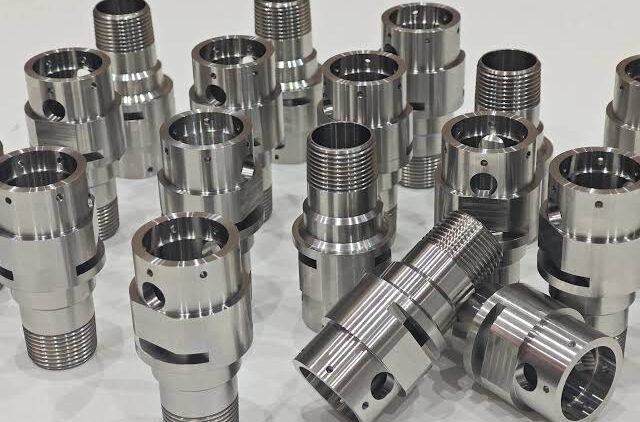
Small-Batch CNC Machining Services for Prototype and Low-Volume Production
Small-Batch CNC Machining Services for Prototype and Low-Volume Production
XTJ CNC offers precision small-batch and prototype machining solutions for manufacturers and engineers across multiple industries.
small-batch CNC machining
The Challenge of Bringing Prototypes to Life
Every product starts somewhere, and that somewhere is rarely a full production run. Engineers designing aerospace components, medical device manufacturers, and automotive suppliers all face the same initial hurdle: how do you validate a design without committing to thousands of parts? The answer lies in understanding your machining partner’s capabilities for small quantities.
Unlike high-volume production facilities that thrive on repetition and economies of scale, small-batch and prototype machining demands flexibility, precision, and the ability to accommodate design iterations. XTJ CNC, based in Carmel, Indiana, has built its reputation on exactly this capability—delivering tight tolerances and quality on runs where volume doesn’t drive the business model.
What Small-Batch CNC Machining Actually Means
Small-batch CNC machining typically refers to production runs of 10 to 1,000 parts, though the exact threshold varies by industry and part complexity. This sits in the sweet spot between one-off prototypes and full-scale manufacturing. At this volume, you’re past the proof-of-concept stage but not yet ready to invest in dedicated tooling or automation designed for millions of cycles.
The economics shift entirely at small-batch volumes. Setup times matter more. Tool changeovers become a larger percentage of total production hours. Scrap rates hit your bottom line harder because there’s less volume to absorb the cost of a mistake. Skilled programmers and operators become critical—someone needs to squeeze efficiency from short runs without sacrificing the precision your design requires.
Why Prototyping Needs Its Own Specialization
Prototype machining is different from small-batch work in a fundamental way: iteration. When you’re proving a concept, parts often come back for modifications. A hole might need to shift by 0.050 inches. A radius might sharpen or soften. Material selections get tested and sometimes swapped.
Shops that handle prototype work need CAD expertise to quickly translate design changes into updated tool paths. They need to understand tolerancing deeply enough to advise when a drawing calls for more precision than necessary—and when to push back if a tolerance is unrealistic for the material and process. They need to communicate like engineers, not just operate machines.
This is where experience in automotive, medical, and industrial sectors becomes visible. A shop that has worked with OEMs knows how to read a print that specifies GD&T (geometric dimensioning and tolerancing), understands surface finish requirements for bearing surfaces versus cosmetic areas, and knows which materials machine cleanly and which demand expertise.
The Materials That Matter in Small-Batch Work
Low-volume runs often feature demanding materials. You’re not usually seeing aluminum 6061 for prototype work—that’s for high-volume commodity parts. Instead, shops handling small-batch work machine stainless steel 316L for medical implants, titanium alloys for aerospace structures, tool steel for cutting dies, and specialty aluminum alloys for thermal management applications.
Each material demands different cutting speeds, feed rates, and tool geometries. Titanium work-hardens aggressively and requires chip evacuation strategies that differ entirely from aluminum. Stainless steel generates heat that can damage tool life if not managed carefully. Tool steel comes in heat-treated conditions that require carbide tools and patience. A shop’s material expertise directly translates to your part quality and cost.
Tolerance Control on Short Runs
Here’s a practical reality: tight tolerances cost money, and that cost accelerates on small batches because setup time doesn’t scale down. A ±0.005-inch tolerance on a run of 100 parts means careful machine setup, probably multiple tool offsets, and possibly secondary operations like grinding or honing.
Before sending a design to a CNC shop for a small batch, review your drawing with a manufacturer’s mindset. Where do you genuinely need precision? Mating surfaces, bearing areas, and functional fits justify tight tolerances. Cosmetic surfaces and non-functional dimensions can often relax to ±0.015 or ±0.020 inches, cutting both machining time and cost.
When you reach out to a shop like XTJ CNC for a quote, be prepared to discuss which tolerances are critical and which have flexibility. This conversation alone can improve lead times and pricing.
Turning Prototypes Into Small-Batch Production
The path from prototype to production isn’t always straightforward. A part that machines beautifully in small quantities might need redesign for higher-volume production. Sharp inside corners that are elegant in a one-off might need radii to accept tool geometry at higher speeds. Thin walls that work at 500 RPM might vibrate excessively at 2,000 RPM.
The best CNC shops think about this transition from the prototype phase onward. They suggest design tweaks not just for manufacturability but for scalability. They understand that what works for ten parts might not work for ten thousand, and they engineer solutions that bridge that gap.
Quality and Documentation in Low-Volume Runs
On small batches, quality documentation becomes even more critical because you can’t assume consistency across a massive production run. Shops handling medical device components or aerospace parts often generate first-article inspection reports (FAIR), material certifications, and dimensional data for every batch.
If your industry requires traceability—and medical, aerospace, and defense industries certainly do—ask about documentation processes upfront. Can the shop provide material certs from suppliers? Do they maintain inspection records? Are they set up for serialization or batch tracking?
Common Questions About Small-Batch Machining
How much does small-batch CNC machining cost compared to high-volume production?
Per-part costs are higher on small batches because setup, programming, and overhead spread across fewer units. You might see 50-200% higher unit costs on a run of 100 parts versus 10,000 parts for the same design. However, the absolute cost stays manageable because you’re not buying dedicated tooling or spending weeks on production scheduling. For prototype validation, this is the whole point—you spend less capital upfront while proving the design.
What’s the typical lead time for a small-batch CNC project?
Lead times typically range from one to four weeks depending on complexity, material availability, and current shop load. Simpler aluminum parts in standard materials move faster. Complex geometries in exotic materials like titanium or specialized stainless alloys take longer. Always discuss lead time expectations when requesting a quote, and be specific about when you need the parts—shops often build in buffer time, and you might get delivery faster than quoted.
Can a shop handle design changes mid-production?
Yes, and this is actually a strength of small-batch shops. If you discover a design issue after the first few parts, a quality CNC facility can pause production, update the tool path, and resume without massive penalty. On a run of 5,000 parts, a design change mid-production is devastating. On a run of 50, it’s manageable. Just communicate clearly with your shop about what changes are possible and whether they affect cost or timeline.
Moving Forward With Your Prototype
When you’re ready to move a design from CAD to metal, the shop you choose shapes not just the quality of your prototype but your ability to iterate and eventually scale. Look for partners with documented experience in your material and industry. Ask to see samples. Understand their inspection capabilities and documentation practices. Discuss your tolerance stack-up openly.
The difference between a frustrating prototype cycle and a smooth one often comes down to whether your machining partner understands your end goals—whether this is a one-off proof of concept or the first step toward production.