

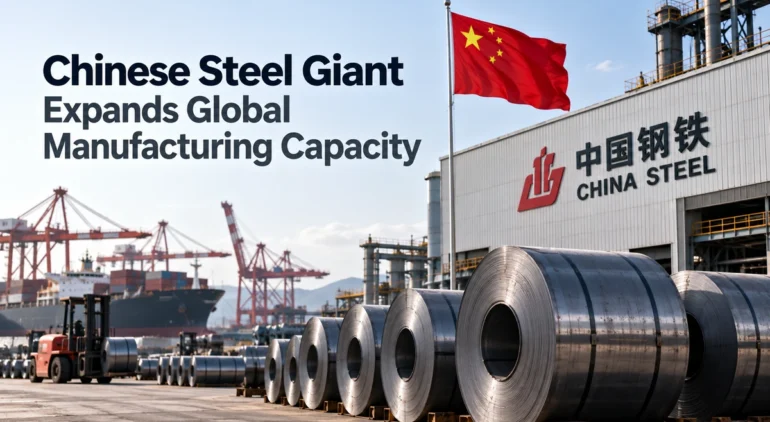
Chinese Steel Giant Expands Global Manufacturing Capacity
Chinese Steel Giant Expands Global Manufacturing Capacity
A major Chinese steelmaker is investing $1 billion in a new manufacturing plant to meet surging demand for high-grade steel products across multiple industries.
Chinese steel expansion
The Billion-Dollar Bet on Steel Manufacturing
When you’re ordering custom steel components for automotive frames or precision-machined parts for industrial equipment, the source of that raw material matters more than you might think. A Chinese steel giant recently announced a $1 billion investment in a new production facility, signaling a major shift in the global steel supply chain. This expansion isn’t just another factory opening—it represents a calculated push to capture market share in regions where demand for high-quality steel products continues to outpace supply.
The scale of this investment tells you something important about current market dynamics. Steel producers don’t commit a billion dollars unless they see sustained, growing demand ahead. This facility will produce specialty steel grades that fabrication shops and metalworking operations rely on for everything from structural components to precision-machined parts.
What This Expansion Means for Fabricators and Metalworkers
For CNC machining shops and steel fabricators, a new production facility translates to potential supply chain improvements. When major producers expand capacity, lead times for material ordering typically decrease. If you’ve experienced the frustration of waiting 8-12 weeks for specific steel grades like 4140 or 300M, you know how constrained the supply has been in certain regions.
The new plant will likely focus on producing mid-to-high carbon steel grades and specialty alloys that feed into automotive manufacturing, aerospace components, and industrial machinery production. These are the materials that require precise composition control and consistent mechanical properties—exactly what modern fabrication and machining operations demand.
Location matters significantly here. Where a steel plant operates affects shipping distances, logistics costs, and ultimately the price point for local metalworking shops. A strategically placed facility reduces transportation overhead and can give regional manufacturers a competitive advantage.
Understanding Modern Steel Production Capabilities
Modern steel plants aren’t just melting metal and pouring it into molds anymore. The new facility will incorporate advanced process controls, quality assurance systems, and testing equipment that ensures every batch meets stringent specifications. This matters directly to you if you’re sourcing material for applications where material certification and traceability are non-negotiable.
The plant will likely employ electric arc furnace (EAF) technology rather than traditional blast furnaces. EAF operations offer better control over alloy composition and can produce specialty grades more efficiently than conventional methods. This process is particularly important for producing clean steel with minimal impurities—something critical when you’re fabricating parts that will undergo heavy load-bearing or high-stress applications.
Quality control in modern facilities includes spectroscopy testing, ultrasonic inspection, and mechanical property verification before material ships to customers. When you’re working with precision components, knowing that your raw material has been tested and certified brings peace of mind.
The Competitive Landscape in Global Steel Manufacturing
This $1 billion expansion reflects broader competition among international steelmakers. Chinese producers have increasingly focused on quality over sheer volume, moving away from commodity-grade products toward specialty steel that commands higher margins and attracts more discerning customers.
For metalworking operations, this competition actually works in your favor. When producers invest heavily in new facilities, they typically offer competitive pricing and improved service to fill capacity. You might see better pricing on bulk orders or more flexible minimum order quantities as the facility ramps up production.
The investment also suggests confidence in continued growth across key markets—automotive, construction, renewable energy infrastructure, and industrial machinery. These sectors drive demand for the specialty steel grades that require advanced production capabilities.
What to Consider When Sourcing Steel in an Expanding Market
As new capacity comes online, don’t immediately switch suppliers just because pricing improves. Establish relationships with proven producers, verify their quality certifications, and understand their testing protocols. A slightly higher price for material from a facility with impeccable quality records beats saving a few cents per ton on material that causes problems during fabrication or fails in service.
When evaluating a new supplier, request mill certificates for test batches. These documents show actual chemical composition, mechanical properties, and testing methods used. For critical applications—especially aerospace or automotive safety components—this documentation becomes essential for regulatory compliance.
Consider the facility’s capacity ramp timeline. New plants often experience initial production challenges as processes are refined and equipment reaches optimal efficiency. If you need consistent, high-volume supply starting immediately, verify the facility’s production timeline before committing to large orders.
Material Selection in the Context of Expanded Supply
With increased capacity across the industry, now is an excellent time to evaluate whether your material choices remain optimal for your applications. Sometimes, fabricators stick with traditional grades simply due to established supplier relationships, not because they’re the best choice for the job.
Modern steel specifications offer alternatives that might reduce machining time or improve service life. For example, if you’ve been using 1045 carbon steel for components that experience moderate wear, exploring 4140 alloy steel or specific tool steel grades might offer superior performance without significantly higher cost.
Discuss material alternatives with your fabrication and machining team. They can identify whether substitutions make sense for your specific applications and whether the new supply situation creates opportunities to optimize your material specifications.
Common Questions About Steel Supply and Sourcing
How long does it typically take for a new steel facility to reach full production capacity? Most modern facilities require 12-24 months to complete commissioning, process optimization, and ramping to full output. Initial production usually starts lower as engineers troubleshoot equipment and refine process parameters. Plan your sourcing strategy accordingly if you’re counting on this specific facility.
What quality standards should I verify when evaluating a new steel supplier? Look for ISO 9001 certification, material testing certifications (ASTM or equivalent), and traceability systems that track material from production through delivery. Request sample mill certificates showing chemical analysis and mechanical property test results. For critical applications, third-party inspection documentation adds another verification layer.
Will expanded capacity actually lower material costs? Usually, yes, but not immediately and not uniformly. Commodity-grade steel typically sees faster price reductions than specialty alloys. Markets also factor in shipping costs, currency fluctuations, and energy prices. Expanded capacity typically stabilizes pricing more than it creates dramatic drops.
Moving Forward with Your Steel and Fabrication Needs
As new production capacity enters the market, take this as an opportunity to reassess your material sourcing strategy. Evaluate your current suppliers’ performance, explore whether material alternatives could improve your operations, and consider whether timing makes sense for larger-scale projects you’ve been planning.
Before committing to a new supplier or material specification, run small pilot batches through your fabrication and machining processes. This practical testing reveals whether theoretical improvements translate to real-world benefits in your specific operations. The cost of a small test run pays for itself if it prevents problems during full-scale production.