

How AI Is Changing Steel Fabrication and CNC Machining
Why Artificial Intelligence Is Becoming Important in Metal Fabrication
A metal fabrication shop can have advanced laser cutters, automated welding equipment, and modern CNC machines but still lose valuable production time because of inefficient scheduling, incomplete information, or inconsistent quality checks.
Artificial intelligence (AI) is emerging as a way to address these operational challenges. At FABTECH 2026 in Las Vegas, manufacturers, technology providers, and industry professionals explored how AI could improve the way fabrication businesses manage production and make operational decisions.
According to an October 29, 2026, report by Tim Heston of The Fabricator, AI was a major focus of the event. However, adopting the technology successfully requires more than purchasing new software or installing automated equipment.
Reliable production data, practical manufacturing knowledge, and a workplace culture willing to embrace technological changes are equally important.
FABTECH 2026 Highlights the Growing Role of AI in Manufacturing
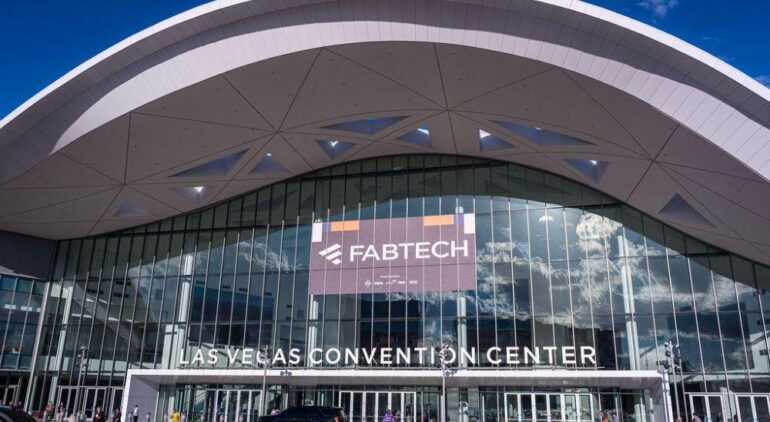
FABTECH 2026 took place from October 21 to 23 at the Las Vegas Convention Center. The event brought together professionals involved in metal forming, fabrication, welding, finishing, and manufacturing technology.
One important development was the introduction of the Artificial Intelligence for Manufacturing (AIM) Pavilion, a dedicated area where attendees could explore AI-powered industrial solutions.
The pavilion highlighted several applications relevant to metalworking businesses, including:
- Predictive maintenance: Analyzing machine conditions to identify potential equipment problems before they cause unexpected downtime.
- Machine vision: Using cameras and AI-based image analysis to inspect components, recognize defects, and support quality control.
- Production analytics: Examining operational data to identify inefficiencies and improve manufacturing decisions.
- Digital twins: Creating digital representations of physical equipment or production processes to support simulation and planning.
- Industrial cybersecurity: Strengthening protection for connected manufacturing systems and operational technology.
- Smart manufacturing software: Connecting CAD/CAM, ERP, MRP, and other production management systems.
These technologies demonstrate that AI is not limited to designing products or generating documents. It can also support activities directly connected to manufacturing operations.
The event’s conference program included more than 180 expert-led sessions across 12 educational tracks, covering AI, automation, fabrication, welding, and other manufacturing subjects.
How AI Can Improve Metal Fabrication Operations
Metal fabrication involves several interconnected processes. A typical project may require material preparation, cutting, forming, welding, finishing, inspection, and delivery.
Problems in one stage can affect the entire production schedule. AI could help manufacturers identify operational issues earlier and make better use of information already collected throughout the shop.
1. Smarter production planning and scheduling
Production scheduling becomes complicated when a fabrication shop handles several customer orders with different materials, dimensions, deadlines, and processing requirements.
AI-assisted planning tools can analyze available production information and help managers identify scheduling conflicts, equipment availability, and possible bottlenecks.
For example, a shop producing stainless steel enclosures and structural steel components may need to coordinate different cutting, forming, and welding operations. An intelligent planning system could help organize work according to available equipment and delivery priorities.
However, the quality of its recommendations depends on accurate production records and realistic information about machine capacity.
2. Better quality inspection through machine vision
Quality control is another area where AI could provide practical benefits. Machine vision systems can analyze images captured by industrial cameras to identify visible defects or irregularities.
In metal fabrication, possible inspection applications include identifying surface imperfections, checking component dimensions, and examining weld appearance.
These systems can support inspectors by highlighting areas that may require closer examination. They do not automatically replace qualified inspection personnel, particularly when specialized testing or engineering judgment is required.
3. Predictive maintenance for CNC and fabrication equipment
Unexpected equipment failure can interrupt production and delay customer orders. Predictive maintenance uses operational information, such as vibration, temperature, and machine performance, to help identify possible equipment problems.
For CNC machining centers, laser cutting equipment, and other automated machinery, this information may help maintenance teams investigate unusual operating conditions before a breakdown occurs.
Rather than relying entirely on fixed maintenance schedules, manufacturers can use equipment data to support more informed maintenance planning.
Why Manufacturing Data and Skilled Workers Still Matter
One of the important messages highlighted in Tim Heston’s report is that successful AI implementation depends on more than the technology itself.
A fabrication business cannot expect an AI system to deliver reliable recommendations when its production information is incomplete, outdated, or inconsistent.
For example, an AI scheduling system may struggle if machine availability is not updated regularly, material inventory records are inaccurate, or employees use different methods to record completed work.
Manufacturers should therefore establish dependable data collection practices before investing heavily in advanced AI solutions.
Experienced operators remain essential
Manufacturing knowledge is another important consideration. Experienced fabricators understand material behavior, equipment limitations, welding procedures, and the practical challenges involved in completing customer orders.
Much of this knowledge develops through years of hands-on experience. AI can help organize and make operational information more accessible, but it cannot automatically replace the judgment required to handle unusual manufacturing conditions.
Businesses should involve experienced operators, production supervisors, engineers, and maintenance personnel when introducing new systems.
Employee participation also helps reduce resistance to technological changes. Workers are more likely to understand and use new tools when they can see how those systems support their actual responsibilities.
How Fabrication Businesses Can Prepare for AI Adoption
Manufacturers do not need to automate every department immediately. A more practical approach is to identify one operational problem where improved information or automation could produce measurable benefits.
Before selecting an AI solution, fabrication businesses should consider several factors:
- Identify the biggest production challenge: Determine whether the main problem involves scheduling delays, material management, inspection, machine downtime, or administrative work.
- Review existing systems: Check whether current CNC equipment, production software, and inventory systems can provide usable information.
- Improve data accuracy: Standardize production records, equipment information, job tracking, and quality documentation.
- Evaluate integration: Confirm whether a proposed AI system can communicate with existing CAD/CAM, ERP, or manufacturing software.
- Train employees: Make sure operators and supervisors understand how the technology works and when human review is necessary.
- Measure actual performance: Compare production time, downtime, defect rates, and operating costs before and after implementation.
A small pilot project can help a business understand the technology’s limitations before committing to a larger investment.
For example, a company experiencing frequent delays in job scheduling could test an AI-assisted planning system before introducing similar tools throughout its entire facility.
The goal should be measurable operational improvement rather than adopting AI simply because it is becoming popular in manufacturing.
Frequently Asked Questions About AI in Metal Fabrication
Can AI replace CNC machine operators and fabricators?
AI can automate certain repetitive tasks and assist with production decisions, but skilled workers remain essential. CNC operators, welders, inspectors, and engineers provide technical knowledge and judgment that automated systems cannot independently replace in every situation.
Is AI useful for small metal fabrication shops?
Yes. Smaller businesses may benefit from targeted applications such as production scheduling, inventory analysis, document management, and equipment monitoring. The appropriate solution depends on the shop’s existing systems, available data, and operational needs.
Does a fabrication business need new CNC machines to use AI?
Not necessarily. Some AI applications work with information collected from existing equipment and software. However, manufacturers should check compatibility, connectivity, data availability, and integration requirements before selecting a solution.
The Future of AI in Steel Fabrication and CNC Machining
FABTECH 2026 demonstrated that artificial intelligence is becoming an important subject in manufacturing discussions. From predictive maintenance and machine vision to production analytics and digital twins, the technology offers several possible ways to improve fabrication operations.
However, successful implementation requires businesses to address fundamental issues involving data quality, employee knowledge, and operational processes.
For steel fabricators and CNC machining companies considering their next technology investment, the best starting point is to review existing production workflows and identify where delays, errors, or unnecessary manual tasks occur.
Once those problems are clearly understood, businesses can evaluate whether AI offers a practical solution. The next generation of competitive fabrication shops will likely depend not simply on having more advanced machines, but on combining capable equipment, experienced workers, reliable information, and intelligent manufacturing systems.
Source: Tim Heston, The Fabricator, October 29, 2026. FABTECH 2026 and the changing role of AI in metal fabrication. Additional event information: FABTECH AI for Manufacturing Pavilion.