

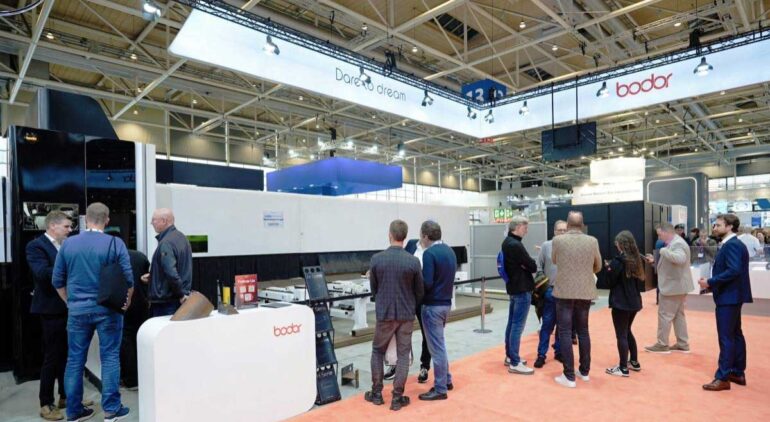
Bodor Laser’s Tube Cutting Technology at EuroBLECH 2026
Why Tube Laser Cutting Matters for Modern Metal Fabrication
A steel tube that requires several cuts, drilled holes, and carefully aligned joints can quickly become a bottleneck on a fabrication line. Tube laser cutting addresses these challenges by combining multiple cutting operations into a computer-controlled process, helping manufacturers produce components with consistent geometry and repeatable accuracy.
At EuroBLECH 2026, Bodor Laser is introducing two premium tube laser cutting machines to the European market while presenting a broader range of metal fabrication solutions. The announcement highlights the company’s efforts to bring tube processing technology and connected production capabilities to an industry where manufacturers continually seek efficient ways to handle demanding fabrication work.
Bodor Laser’s European Debut at EuroBLECH 2026
EuroBLECH is an international exhibition focused on sheet metal working and related industrial technologies. It provides manufacturers, equipment suppliers, and fabrication specialists with an opportunity to explore machinery and production approaches relevant to their operations.
Bodor Laser’s presentation centers on two premium tube laser cutting machines making their European debut. The introduction gives European industry professionals an opportunity to learn about the company’s tube-processing offerings alongside its wider metal fabrication portfolio.
The announcement also emphasizes an end-to-end approach to metal fabrication. Rather than treating tube cutting as an isolated operation, this approach considers how cutting equipment fits into the wider production process, from preparing raw material to producing components ready for subsequent manufacturing steps.
Specific machine model names, cutting capacities, power ratings, and technical specifications could not be verified from the accessible source material. Buyers should consult Bodor Laser’s official product documentation before comparing individual machines or making equipment decisions.
How Tube Laser Cutting Improves Fabrication Workflows
Tube laser cutting uses a focused laser beam to cut profiles according to a programmed design. Depending on the machine configuration and material, the process can produce straight cuts, openings, slots, and complex contours without requiring a separate tool for every feature.
For manufacturers processing steel tubing, this can simplify work that might otherwise involve several machines, fixtures, or manual operations. A digital design can guide the cutting process, while appropriate machine settings help maintain consistent results across repeated production runs.
1. More precise component preparation
Accurate tube geometry matters when components must fit together during welding or assembly. Laser-cut features can help manufacturers maintain the intended dimensions and positions of openings, notches, and connecting sections.
However, the final result depends on more than the laser itself. Tube straightness, material variation, workholding, machine calibration, and the quality of the original design can all affect dimensional accuracy.
2. Fewer separate processing steps
Traditional tube fabrication may involve sawing, drilling, milling, and manual finishing. A suitably configured tube laser can combine several of these cutting-related tasks into one programmed operation, potentially reducing material handling between processes.
This does not eliminate every downstream operation. Welding preparation, deburring, inspection, bending, and finishing may still be necessary depending on the component’s design and required quality standards.
3. Repeatable production
Computer numerical control, commonly known as CNC, allows cutting instructions to be stored and reused. Once a program has been validated, manufacturers can reproduce the same component geometry across subsequent production batches, subject to normal process controls.
Repeatability is especially useful for companies manufacturing equipment frames, metal furniture, structural assemblies, agricultural machinery, and automotive components. Each application still requires the appropriate material specifications, tolerances, and inspection procedures.
Why an End-to-End Fabrication Approach Matters
Purchasing a cutting machine is only one part of improving a metalworking operation. Production performance also depends on how raw material enters the line, how components move between workstations, and how finished parts are checked and prepared for assembly.
An integrated fabrication strategy considers these stages together. Equipment selection, production software, material handling, operator training, maintenance, and quality control should support the same manufacturing objectives.
For example, a company producing tubular frames may need to cut multiple lengths, create connection openings, and prepare components for welding. The best solution depends on the tube profiles, wall thicknesses, material grades, required output, and downstream assembly requirements.
Bodor Laser’s end-to-end positioning at EuroBLECH 2026 makes the relationship between individual machines and the broader production workflow an important subject for visitors to investigate. The precise scope of the company’s complete offering should be confirmed directly with its representatives.
What Fabricators Should Evaluate Before Buying a Tube Laser
A machine’s headline specifications do not tell the entire story. Fabricators should evaluate their actual production requirements before deciding whether a particular tube laser is appropriate for their facility.
Material compatibility: Confirm which materials the machine supports, including the steel grades, stainless steel, or aluminum alloys used in production. Cutting parameters and achievable results differ according to material composition and thickness.
Tube dimensions: Check the supported tube diameters, lengths, shapes, and maximum material weights. Round, square, rectangular, and other profiles may require different handling capabilities or machine configurations.
Cutting performance: Request documented information about cutting speed, positioning accuracy, repeatability, and achievable tolerances under representative operating conditions. Maximum advertised performance should not be assumed for every material or geometry.
Software and integration: Determine whether the machine can work with existing CAD/CAM systems and production planning processes. File compatibility, nesting functions, programming requirements, and operator training can influence overall productivity.
Service and operating costs: Ask about installation, preventive maintenance, consumables, spare parts, technical support, and operator instruction. A realistic ownership assessment should include these expenses alongside the purchase price.
Safety and facility requirements: Review laser safety provisions, extraction and filtration needs, electrical requirements, floor space, and material-loading arrangements. The installation must comply with applicable workplace safety standards.
Frequently Asked Questions
What is a tube laser cutting machine used for?
A tube laser cutting machine processes hollow metal profiles and, depending on its configuration, other compatible shaped sections. It can create cut-to-length components, slots, openings, and contours used in industrial frames, machinery, furniture, vehicle components, and other fabricated products.
What makes tube laser cutting different from conventional sawing?
Sawing is effective for producing straight cuts, but complex tube components may require additional drilling, milling, or notching. Tube laser systems can perform multiple programmed cutting operations in a single setup, potentially reducing handling and improving consistency. The best method depends on component geometry, material, volume, and required tolerances.
What should buyers ask Bodor Laser about the new machines?
Prospective buyers should request the exact model names, supported tube dimensions, material and thickness ranges, laser specifications, cutting performance data, automation options, software compatibility, and service arrangements in their region. They should also ask whether the equipment can be demonstrated using representative parts from their own production requirements.
What EuroBLECH 2026 Means for Metal Fabricators
The European debut of two premium tube laser cutting machines puts tube processing technology and integrated fabrication workflows in focus at EuroBLECH 2026. For manufacturers evaluating production upgrades, the announcement provides a reason to examine how modern laser cutting equipment could fit into their existing operations.
The practical next step is to identify the components that create the greatest production challenges, document their material and dimensional requirements, and compare suitable equipment against those needs. Before committing to a machine, fabricators should request verified specifications, sample-part testing, a clear operating-cost estimate, and details of local technical support.
These checks can help manufacturers distinguish between impressive equipment demonstrations and a solution that delivers measurable value on the factory floor.