

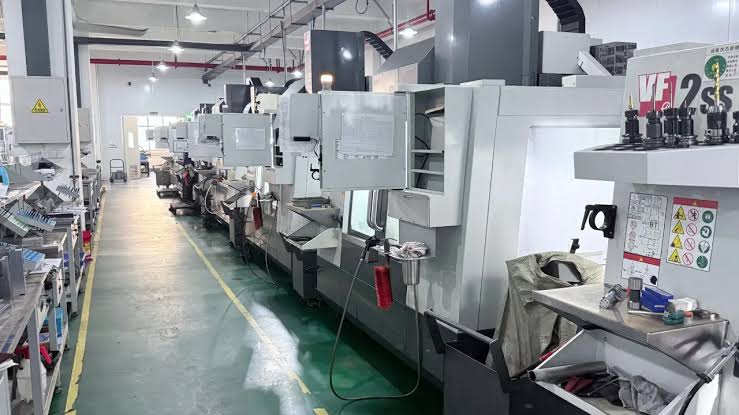
CNC Machining Manufacturers in China Today
CNC Machining Manufacturers in China Today
Precision CNC machining from Chinese manufacturers meets global quality standards for industrial applications and custom parts production efficiently.
CNC machining manufacturers China
The Hidden Reality Behind Global Precision Manufacturing
Every day, manufacturers across North America and Europe rely on precision components they may not realize originated from Chinese CNC shops. A single automotive transmission housing, aerospace bracket, or medical device component often travels thousands of miles before assembly—and the quality of that journey determines whether the final product succeeds or fails. The stereotype that Chinese manufacturing means compromised quality has quietly dissolved over the past decade, replaced by a more complex reality: some of the world’s most demanding industries now depend on CNC machining manufacturers in China delivering tolerances measured in microns.
The shift happened gradually. Western manufacturers initially turned to China for cost reduction, but stayed because they discovered something unexpected: serious investment in machinery, quality control systems, and engineer expertise. Today’s landscape looks entirely different from the race-to-the-bottom competition of the early 2000s.
Why Chinese CNC Manufacturers Matter to Your Supply Chain
China’s CNC machining sector doesn’t compete on price alone anymore—though cost efficiency remains a legitimate advantage. Modern Chinese facilities operate sophisticated multi-axis CNC machines, coordinate measuring machines (CMMs), and automated testing equipment that matches or exceeds what you’d find in established Western shops. The real differentiator has become capacity and speed.
Consider a scenario: you need 5,000 custom aluminum brackets with complex internal passages for a hydraulic application. Lead times matter. Delivery windows matter. Quality consistency matters. A capable Chinese manufacturer can often handle this volume while maintaining ISO 9001 or TS 16949 certifications that your supply chain requires. The combination of experience, equipment investment, and competitive pricing creates a practical advantage that explains why companies from Germany to Canada maintain active relationships with reputable Chinese shops.
The industrial applications spanning these relationships run deep: automotive powertrains, industrial pumps and valves, medical imaging equipment housings, semiconductor processing equipment, and aerospace component subassemblies all move through these facilities regularly.
Understanding the Technical Capabilities That Matter
Not all CNC machining facilities operate at the same level. The difference between a machine shop and a precision manufacturing partner often comes down to specific capabilities. Reputable Chinese manufacturers typically offer capabilities that include turning operations on CNC lathes handling materials from aluminum alloys through stainless steel and cast iron, milling on vertical and horizontal machining centers with multi-axis capacity, and coordinate measuring systems for first-article inspection and statistical process control.
Materials processing represents another critical dimension. Working with 6061-T6 aluminum for lightweight components differs fundamentally from machining 17-4 PH stainless steel for corrosion-resistant applications or A356 aluminum castings that require specialized tool strategies. Experienced manufacturers maintain material-specific knowledge that prevents common pitfalls—tool deflection, surface finish degradation, or tool life reduction that can spike scrap rates and delay schedules.
Surface finishing capabilities also distinguish serious players. Many industrial applications demand anodizing for aluminum parts, passivation for stainless steel, or specialized coatings for corrosion resistance or wear reduction. Facilities offering integrated finishing alongside machining eliminate coordination complexity and reduce final delivery times.
Quality Systems and Certification as Practical Checkpoints
Walking into a facility with ISO 9001 certification doesn’t automatically guarantee excellence, but it signals that formal processes exist for documentation, traceability, corrective action, and continuous improvement. TS 16949 certification (the automotive industry standard) indicates even more rigorous process controls specifically designed for automotive supply chain requirements—which sets a high bar that benefits any precision manufacturing customer.
Look for manufacturers who maintain first-article inspection documentation and statistical process control (SPC) data. These practices transform quality from a checkbox into a predictive system. When a manufacturer can show you SPC charts demonstrating that a critical dimension has remained within specification across 500 consecutive parts, you’ve moved beyond hoping for quality—you’re seeing evidence of controlled processes.
Third-party audits matter too. Some Chinese manufacturers welcome independent audits from large OEMs or third-party inspection firms. This openness signals confidence and reduces your risk significantly.
What Sets Reputable Manufacturers Apart
Scale matters, but not in the way many assume. A facility with 40 CNC machines operating around the clock under professional management will outperform a larger facility with outdated equipment and inconsistent processes. The best manufacturers invest continuously in newer machines with faster spindle speeds, higher accuracy, and better surface finishes. They upgrade regularly rather than running equipment to complete depreciation.
Technical depth in the engineering team separates capable shops from excellent ones. When you submit drawings, someone should review them for manufacturability before quoting—identifying potential issues, suggesting optimizations, or flagging material selections that might cause problems. This service prevents expensive surprises downstream.
Communication infrastructure matters practically. Manufacturers with English-speaking engineering and quality staff, clear documentation systems, and responsive project management reduce friction in international supply chains. Time zone differences become manageable when someone on their team operates during overlap hours and maintains detailed communication logs.
Navigating Common Challenges with International Suppliers
Long lead times represent the first concern for most buyers. Good manufacturers publish realistic lead times and communicate early about schedule impacts. They maintain buffer capacity rather than running completely full, which allows flexibility for your urgent requests without completely disrupting other customers’ schedules.
Quality consistency over production runs demands attention. Ask specifically how your parts will be inspected—first-article only, or sampling throughout the run? Reputable manufacturers often perform 100% dimensional checks on critical features and statistical sampling on secondary features, documenting results for your records.
Intellectual property protection concerns also arise frequently. Legitimate manufacturers maintain confidentiality agreements, limit access to drawings within the facility, and don’t discuss customer specifications or designs publicly. They understand that their reputation depends on being trustworthy, not just cheap.
Evaluating a Manufacturer Before You Commit
Request sample parts machined to your specifications. Not theoretical quotes or brochure examples—actual parts made from your drawings using their processes. Examine finish quality, dimensional accuracy, and surface condition. This single step reveals whether their equipment, tooling strategy, and operator skill align with your actual requirements.
Ask for customer references specific to your industry. A manufacturer with aerospace experience brings different discipline to tolerances and documentation than one primarily serving local industrial clients. They should willingly provide at least three references you can contact independently.
Clarify the communication model before engaging. How often will you receive updates? Who specifically will you contact with questions? What happens if quality issues arise—will they rework at no charge? These details prevent misalignment later.
Frequently Asked Questions About Chinese CNC Manufacturing
What’s a realistic lead time for custom CNC parts from China? Standard machined components typically require 3-4 weeks production time plus 1-2 weeks for inspection and shipping. Simpler parts might ship in 2 weeks total. Complex multi-operation components or high volumes may extend to 6-8 weeks. Always confirm specific dates rather than assuming generic timelines.
How do you ensure the parts I receive actually match the quality standards discussed? Legitimate manufacturers provide inspection certificates documenting dimensional measurements against your specifications, material certifications from suppliers, and traceability back to specific machines and operators. Request these documents as standard deliverables rather than special requests.
What happens if parts arrive with quality issues? Clearly define expectations in your purchase agreement. Most reputable manufacturers will rework defective parts at no charge or provide credit toward future orders. Get this in writing before sending money, not after discovering problems.
Taking Your Next Step
The decision to source CNC machining internationally carries legitimate risks—but so does overlooking capable manufacturers simply based on geography. Start with a small pilot order before committing to production volumes. This approach costs less than the mistakes of choosing poorly, and it gives you genuine data about whether a specific manufacturer truly delivers what they promise. Focus on manufacturers who make your life easier through clear communication, documented processes, and genuine accountability rather than simply pursuing the lowest quote.