

Emblems in Quezon City
Emblems in Quezon City: Why Custom Metal Fabrication Produces Brand Identifiers That Last
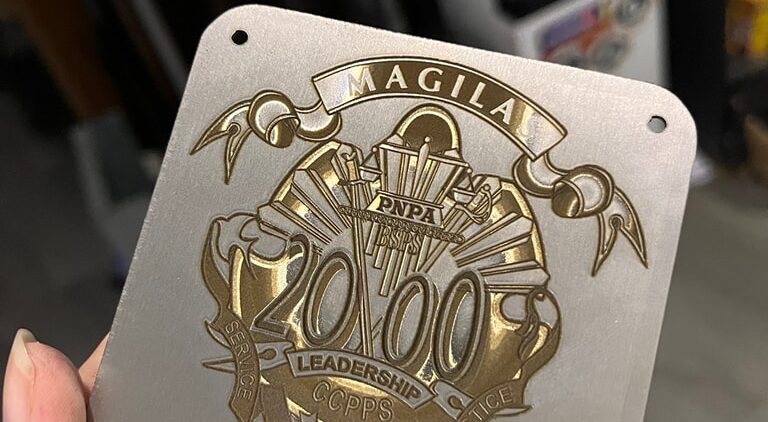
An emblem is more than a logo cut from metal. It is a physical representation of a brand, an institution, or an identity — one that will be seen, touched, and evaluated by everyone who encounters it over its installed lifetime. The difference between a metal emblem that commands immediate respect and one that reads as an afterthought comes down to two things: the precision of the cut geometry and the quality of the finish. Both are fabrication decisions, made long before the emblem is ever mounted on a vehicle, building, product, or signage system.
For businesses, government agencies, vehicle customizers, schools, and organizations sourcing emblems in Quezon City and across Metro Manila, understanding what separates a properly fabricated metal emblem from a generic stamped alternative clarifies why fabrication quality is the specification that matters most in this product category. Boswell Limited Co., a steel fabrication company based in Malabon since 2005, produces custom metal emblems using CNC laser cutting technology and a material range that covers the full spectrum of emblem applications — from automotive badges to architectural signage to institutional identification.
What a Metal Emblem Actually Requires to Work as Intended
A metal emblem serves a visual communication function in a physical environment. Unlike a digital logo or a printed graphic, it must hold its visual identity under varying lighting conditions, at different viewing distances, through weather exposure, handling, and the general wear that any installed object accumulates over years of service. Several fabrication factors determine how well it does this.
Profile Accuracy — The accuracy with which the emblem’s outer perimeter and internal cutouts match the original logo or design geometry is the most fundamental quality indicator. An emblem whose letterforms are slightly inconsistent, whose curves do not match the design file, or whose internal negative space is asymmetrical when the design is not — these are visible errors that undermine the brand identity the emblem is meant to project. CNC laser cutting produces profiles that match the programmed geometry to fractions of a millimeter, eliminating the hand-cut approximation that makes manually produced emblems look less than authoritative.
Edge Quality — The visible edges of a metal emblem are part of its visual character. Clean, sharp edges with consistent depth and no burr or rough surface define a precision-fabricated emblem. Edges produced by laser cutting on appropriate material and gauge settings are significantly cleaner than those produced by plasma cutting or mechanical punching on the fine-detail geometries that emblem work typically involves.
Surface Finish — Finish is what the eye reads first at normal viewing distance. A brushed stainless emblem, a polished brass badge, a powder-coated aluminum logo panel — each communicates a different brand character, and the quality of the finish determines whether that character reads as premium or ordinary.
Dimensional Consistency Across Production Runs — For organizations ordering multiple identical emblems — a vehicle fleet, a product line, a chain of commercial locations — every emblem in the order must be visually identical to every other. A CNC-produced emblem batch achieves this inherently; manually produced batches do not.
Materials for Custom Metal Emblems
Material choice shapes the visual character of a metal emblem as much as its geometry does, and different applications call for different material properties.
Stainless Steel is the most common material for automotive emblems, vehicle badges, and outdoor architectural signage where long-term corrosion resistance and a clean, contemporary aesthetic are priorities. Stainless emblems can be left with a brushed finish that resists fingerprinting and scratching in high-touch applications, or polished to a mirror finish for premium automotive and architectural installations. The material’s inherent corrosion resistance means the emblem’s appearance does not degrade through surface rust over its installed lifetime — a critical requirement for outdoor and automotive applications in Metro Manila’s humid environment.
Aluminum is the preferred material for larger-format emblems and logo panels where minimizing weight is a practical concern — large wall-mounted corporate signage, vehicle door emblems on commercial fleet vehicles, and architectural identification elements where the mounting substrate has load limitations. Aluminum accepts anodizing as a finish treatment, providing a hard, color-stable surface in a range of colors including clear, black, bronze, and champagne that suits a wide range of corporate and institutional brand palettes.
Brass produces the warmest visual character of any common emblem material, with a golden color and the capacity to develop a natural patina over time that many institutional and heritage-brand applications specifically value. Brass emblems are commonly specified for academic institutions, government offices, professional associations, and organizations where the material’s traditional character is part of the identity being communicated.
Carbon Steel with appropriate finishing — powder coating, clear coating, or controlled patination — is used for emblems where visual character is achieved primarily through finish rather than the material’s inherent color, or where the industrial aesthetic of raw or treated steel is consistent with the brand’s identity.
Copper appears in premium decorative emblem work where the material’s distinctive reddish color and patina development characteristics are integral to the design intent, typically in architectural and institutional applications where longevity and material character are prioritized over cost.
Applications for Custom Metal Emblems Across Quezon City’s Sectors
The range of organizations and businesses operating in Quezon City generates a correspondingly broad range of emblem applications, each with its own dimensional, material, and finish requirements.
Automotive and Vehicle Emblems are among the most technically demanding emblem applications because they are attached to a moving vehicle, subject to vibration, road debris impact, temperature cycling, rain, and the judgment of anyone who looks at the vehicle from close range. Automotive emblems require precise profile accuracy to match the design file, appropriate material for outdoor corrosion resistance, and secure mounting hardware that keeps the emblem firmly attached through years of road use without leaving adhesive residue or corrosion staining on the vehicle surface.
Corporate and Commercial Signage uses metal emblems as identity elements on building facades, reception areas, product packaging, and branded environments. The size range for commercial emblem work spans from small desk plaques to large architectural logo installations, and the material and finish specification is driven primarily by the interior or exterior exposure and the brand’s visual identity standards.
Institutional Identification covers schools, universities, government agencies, hospitals, and professional organizations operating extensively across Quezon City, all of which use metal emblems as official identification elements on buildings, vehicles, award plaques, and ceremonial items. These applications typically prioritize durability and a formal material character — brass, stainless, or bronze-finished aluminum — that communicates institutional authority.
Product Branding and Manufacturer Badges are small-format emblems affixed to manufactured products — appliances, equipment, electronics, and industrial products — that carry the manufacturer’s brand identity on the product itself. These require consistent profile accuracy and finish quality across potentially large production volumes, since every unit shipped carries the emblem as a direct representation of the brand.
Awards, Plaques, and Recognition Items use metal emblems as the visual centerpiece of recognition hardware, where both material quality and finish precision communicate the value placed on the achievement being recognized.
The CNC Laser Cutting Process for Emblem Production
Emblem production at Boswell begins with the client’s design file — a vector format logo or drawing from which the cutting program is generated. The engineering team reviews the design for laser cutting manufacturability, checking minimum feature sizes, bridge widths between adjacent cutout areas, and any geometry that may require adjustment to achieve clean laser-cut results at the specified material and gauge.
Once the design is cleared, the cutting program is generated and the emblem profiles are nested on the sheet to minimize material waste across the production run. The laser cuts each emblem profile and internal cutout from the programmed file, producing edges that match the design geometry with the positional accuracy and surface quality that emblem applications require.
Post-cutting processes — deburring, surface finishing, anodizing, powder coating, polishing, or brushing depending on the material and specification — are applied before the finished emblems are inspected and packaged for delivery. For emblems with mounting hardware — standoffs, adhesive backing, or mechanical fastener provisions — these are applied or installed as part of the post-production process, delivering a finished emblem ready for direct installation.
Finish Consistency Across Volume Production Runs
For clients ordering multiple identical emblems — a vehicle fleet, a multi-location business, a product manufacturing run — finish consistency across the full order quantity is as important as the finish quality on any individual piece. An emblem that looks slightly different from its neighbors on a fleet vehicle or a product line immediately reads as a quality control failure, undermining the brand consistency the emblem was intended to reinforce.
Boswell’s production process addresses this through consistent material sourcing, controlled finishing process parameters, and batch inspection that verifies finish uniformity across the order before delivery. The CNC cutting process that produces geometrically identical profiles across the batch is matched by finishing processes applied under controlled conditions that produce consistent surface character from the first emblem to the last.
Boswell Limited Co.: Custom Metal Emblems Built on Fabrication Precision
Since 2005, Boswell has developed its CNC cutting and finishing capability across a product range that includes everything from heavy structural components to fine-detail architectural and decorative metalwork. Custom emblem fabrication sits at the precision end of that range — work where the design geometry must be reproduced exactly, the finish must be consistent across every piece, and the material must be selected with the emblem’s operating environment and visual requirements in mind.
If your organization requires custom metal emblems in Quezon City or anywhere across Metro Manila — for vehicles, buildings, products, institutional identification, or awards — Boswell Limited Co. has the laser cutting precision, material range, and finishing capability to deliver emblems that represent your brand with the quality it deserves.
Contact Boswell Limited Co. to discuss design files and specifications for your next custom emblem project.