

Mufflers in Quezon City
Mufflers in Quezon City: What Custom Exhaust Fabrication Actually Requires to Get Right
A muffler is one of the most thermally and mechanically stressed components on any vehicle. From the moment an engine fires, the exhaust system is subjected to rapid temperature swings — from ambient to several hundred degrees Celsius within minutes of startup, and back down again after the engine stops. It carries corrosive combustion gases at elevated pressure, vibrates continuously with the engine and road inputs, and in the Philippine operating environment specifically, faces the additional challenge of humidity, rain exposure, and the stop-and-go heat cycling of Metro Manila traffic that accelerates corrosion and thermal fatigue faster than almost any other operating condition worldwide.
For vehicle owners, motorcycle builders, automotive workshops, and fleet operators sourcing mufflers in Quezon City and across Metro Manila, the quality of the fabricated exhaust component is not a minor detail — it is what determines whether the system lasts two years or ten. Boswell Limited Co., a steel fabrication company based in Malabon since 2005, fabricates custom muffler and exhaust components using the same CNC-driven precision and material discipline it applies across its full range of structural and industrial products. Because a muffler is not just sheet metal bent into a tube — it is an engineered component that needs to be fabricated correctly to survive its operating environment.
What a Muffler Is Actually Built From
Understanding the fabrication requirements of a muffler starts with understanding what the component consists of and what each part must do under operating conditions.
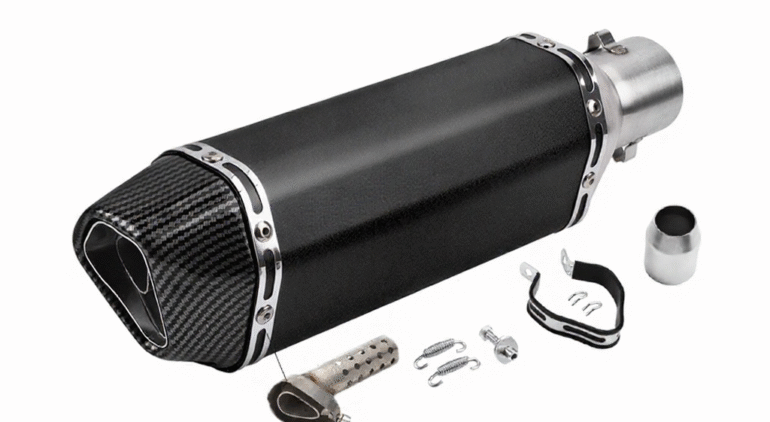
The Outer Shell is the visible external casing of the muffler, formed from sheet metal bent and rolled into a cylindrical or oval profile and seam-welded along its length. The shell must maintain its geometry under thermal expansion and contraction cycles without cracking at the weld seam, and must resist external corrosion from rain, road splash, and the humid Metro Manila atmosphere.
End Caps close the muffler shell at both ends, welded to the shell perimeter. End cap fit-up quality — how tightly the cap profile matches the shell opening before welding — directly determines weld quality at this joint, which is one of the highest-stress locations in the muffler assembly.
Internal Baffles and Perforated Core Tubes sit inside the shell, creating the chambers and flow paths that attenuate exhaust sound through a combination of reflection, absorption, and expansion. The geometry of these internal components determines the muffler’s acoustic performance — how much sound reduction it achieves and at what frequency range — as well as its back pressure characteristics, which affect engine performance.
Inlet and Outlet Pipes connect the muffler to the upstream exhaust pipe and the tailpipe, requiring accurate diameter and end preparation to make tight, leak-free connections with the rest of the exhaust system. Pipe diameter, wall thickness, and end treatment — whether straight cut, flared, or fitted with a slip joint — must match the vehicle’s exhaust system specifications exactly.
Mounting Brackets and Hangers secure the muffler to the vehicle chassis, transmitting the muffler’s weight and the dynamic loads of road vibration into the mounting points without fatiguing at the weld or bracket material over the vehicle’s service life.
Material Selection: Why It Determines Lifespan More Than Any Other Factor
Material choice is the single most important decision in muffler fabrication for the Philippine operating environment, and it is where many generic or budget exhaust components fail well before they should.
Mild Carbon Steel is the least expensive material for muffler fabrication and is commonly used in standard replacement mufflers for cost-sensitive applications. The limitation is corrosion resistance — mild steel exhaust components in Metro Manila’s humid environment, subjected to repeated wet-dry cycles and combustion condensate exposure in the lower temperature sections of the exhaust system, typically show significant surface rust within the first year and through-corrosion within three to five years depending on the operating pattern and whether the vehicle is regularly exposed to rain and road splash.
Aluminized Steel — carbon steel with an aluminum-silicon coating applied to both surfaces — provides meaningfully better corrosion resistance than plain mild steel at a moderate cost premium. The aluminum coating sacrifices itself preferentially to protect the underlying steel, extending service life significantly in humid operating environments. Aluminized steel is the most common compromise between cost and corrosion resistance for general-purpose replacement muffler fabrication.
Stainless Steel is the correct material choice for mufflers intended to provide long service life in Metro Manila’s conditions. Stainless steel’s corrosion resistance is not a coating applied to a carbon steel substrate — it is an inherent property of the alloy itself, derived from the chromium content that forms a self-repairing passive oxide layer on the surface. A properly fabricated stainless muffler does not rust through at the seams, does not develop the pinhole corrosion that eventually collapses aluminized steel in the lower-temperature sections of the muffler, and does not require replacement on a two-to-three year cycle the way mild steel exhaust components typically do in this environment.
The higher upfront cost of stainless steel muffler fabrication is recovered over the service life of the component through eliminated replacement cycles and the labor cost of repeated exhaust system work. For vehicle operators who factor total cost of ownership rather than just purchase price, stainless is consistently the more economical choice.
CNC Fabrication and Why Fit Matters in Exhaust Systems
An exhaust system that does not fit correctly is an exhaust system that leaks, vibrates excessively, contacts adjacent components, and creates clearance problems throughout the vehicle’s underbody. Custom muffler fabrication requires accurate dimensions — not approximate ones — because the inlet and outlet pipe diameters and positions must align with the vehicle’s existing exhaust routing, and the overall muffler envelope must fit within the available underbody space without contacting the chassis, suspension components, or heat-sensitive parts nearby.
Boswell’s CNC cutting and forming process produces muffler shell, end cap, and pipe components to the dimensional specification of the project drawing or sample, rather than relying on operator approximation during forming. Shell rolling to consistent diameter, end cap profiles cut to match the shell perimeter, and pipe lengths cut square and to accurate dimension — all of these are programmed operations rather than manual ones, and the result is a component that installs without the gap-filling, shimming, and field adjustment that poorly dimensioned exhaust components require.
Weld Quality in Muffler Fabrication: The Factor That Determines Leak-Free Service Life
Exhaust system leaks are among the most common failure modes in fabricated mufflers, and they almost always trace back to weld quality at one of three locations: the shell seam, the end cap perimeter welds, or the inlet and outlet pipe junction welds.
A leak at any of these locations allows hot combustion gas to escape into the vehicle’s underbody — a safety concern as well as a functional one — and accelerates corrosion of the surrounding metal by depositing acidic combustion products on surfaces that were not designed for that exposure.
TIG welding is the appropriate process for stainless steel muffler fabrication, providing the controlled heat input and precise fusion that thin-gauge stainless requires for leak-free seam welds without distorting the shell geometry or compromising the material’s corrosion resistance in the heat-affected zone. MIG welding is appropriate for aluminized and mild steel exhaust components where higher deposition rate and lower process cost are acceptable given the material’s lower corrosion resistance requirements.
Boswell’s welding process on exhaust components applies process selection matched to the material specified, with weld parameters set for the shell and pipe gauges involved and post-weld inspection verifying seam integrity before the finished muffler leaves the shop.
Custom Muffler Fabrication for Motorcycles, Passenger Vehicles, and Commercial Fleets
Custom muffler fabrication serves different client types with different requirements, and understanding those differences clarifies why a one-size specification does not serve all applications.
Motorcycle builders and customizers source custom mufflers as part of complete exhaust system builds, where the muffler’s visual character — its shape, finish, and mounting position — is as important as its acoustic and flow performance. Stainless steel motorcycle mufflers with polished or brushed finishes are among the most visually prominent components on a custom build, and fabrication quality is directly visible to anyone who looks at the bike.
Automotive workshops and vehicle owners source custom mufflers as replacements for discontinued OEM parts no longer available through standard supply channels, or as upgraded components for vehicles where the original equipment muffler’s performance or durability did not meet the owner’s expectations.
Fleet operators sourcing mufflers for commercial vehicles — delivery trucks, utility vehicles, and public transport units operating in Quezon City’s demanding stop-and-go conditions — prioritize durability and service life over all other factors, since muffler replacement on a fleet vehicle means downtime and labor cost that compounds across dozens or hundreds of units.
Boswell Limited Co.: Muffler Fabrication Built on Material Knowledge and Process Precision
Since 2005, Boswell has fabricated exhaust components as part of its broader custom metalwork capability, developing the material knowledge and welding process discipline that durable muffler fabrication requires. The investment in CNC equipment since 2015 has sharpened the dimensional accuracy of shell, end cap, and pipe components, reducing fit-up issues at the welding stage and producing finished mufflers that install correctly without field adjustment.
If your project requires custom mufflers in Quezon City or anywhere across Metro Manila — whether for a single custom motorcycle build, a vehicle restoration, or a commercial fleet maintenance program — Boswell Limited Co. has the fabrication capability and material expertise to deliver exhaust components built for the conditions they will actually face.
Contact Boswell Limited Co. to discuss specifications for your next custom muffler or exhaust fabrication project.